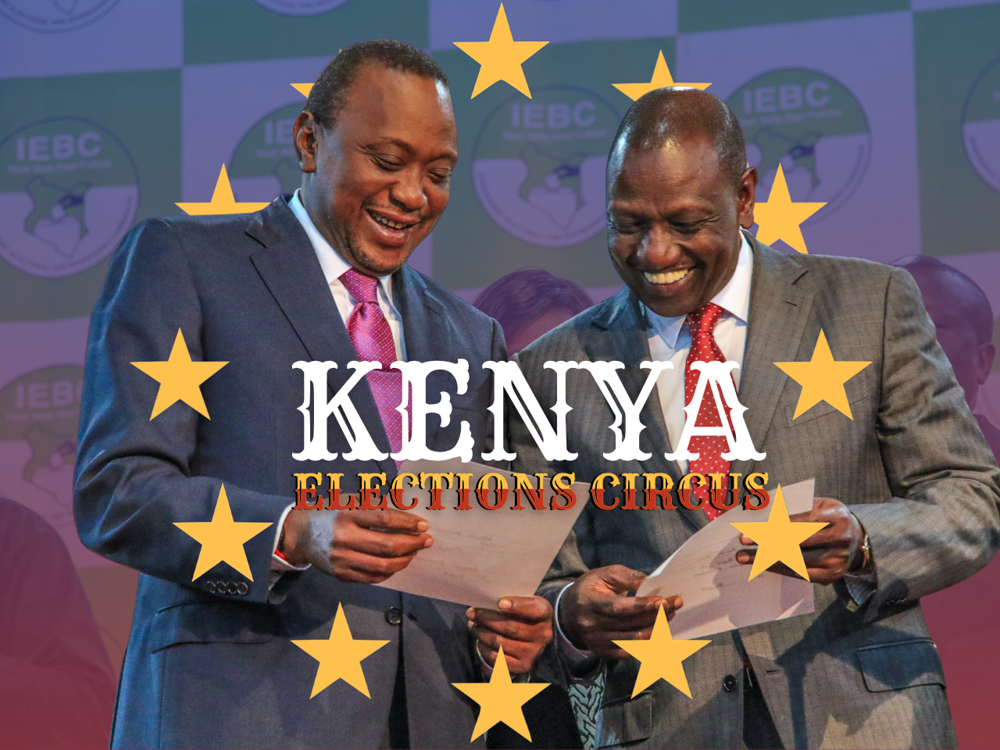
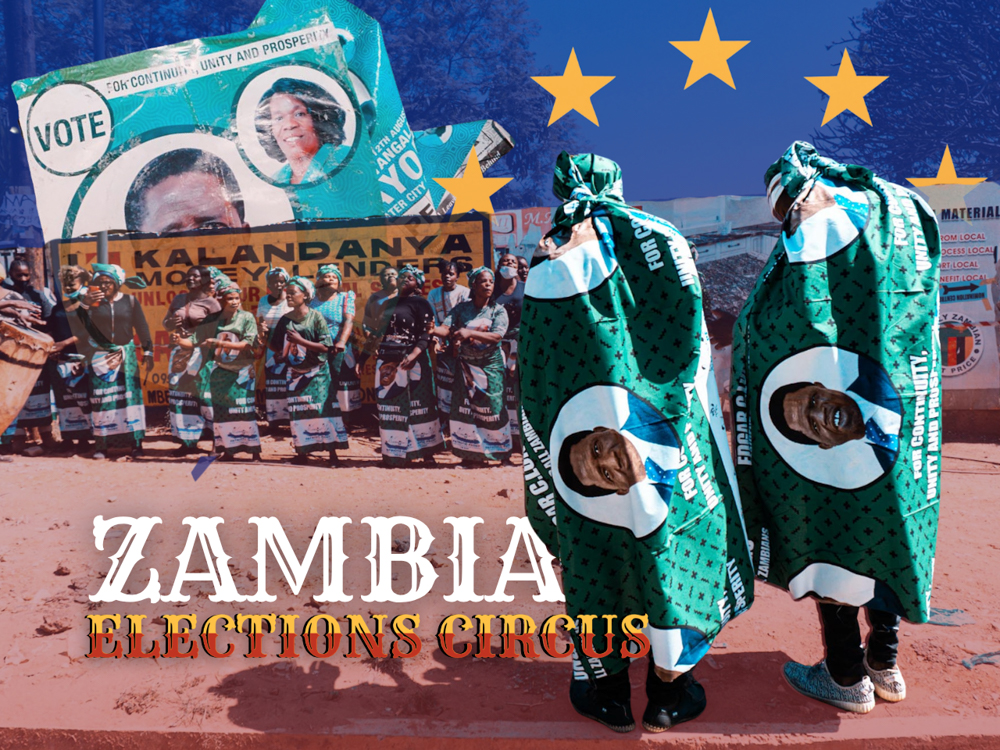
For more than four decades, Caesar Masina (62), a resident of Lusaka, Zambia’s capital, has participated in his country’s elections, lining up at polling stations, casting his ballot, and watching governments change through the vote. This year, however, may be different. With elections approaching in August, he says his trust in the country’s institutions has gradually eroded. “The forthcoming election is ridiculous. I may not vote.”
“The Electoral Commission, and also Parliament and the judiciary, are so politicised,” he adds. “The outcomes sometimes appear predetermined long before voters enter the polling booth. Governance institutions now decide for me, as if there is already a prepared script that will declare the elections ‘free and fair’.”
“It is as if a script already says the elections were ‘free and fair’
Masina’s frustration reflects a broader and deepening public unease. Many election observers in the media and civil society have pointed to patterns that increasingly appear to define Zambia’s recent electoral cycles, in which official narratives of “calm and order” often sit uneasily alongside reports of intimidation, structural bias, and contested institutional conduct.
Pressure
In the recent Kasama mayoral by-election, held on 29 January 2026 in the capital of Zambia’s Northern Province, authorities and official government observers described the vote as peaceful. However, accounts from voters interviewed on the ground suggest a more complex reality. “It was peaceful,” one said, “but people were quiet. You could feel it.” He described how voters withdrew from open participation due to perceived pressure following visits by nearly ten cabinet ministers, including the Minister of Finance, as well as senior State House officials and several district commissioners who travelled to Kasama during the campaign period.
“People were quiet. You could feel it.”
In Kasama, where municipal by-elections are typically low-profile, this concentration of executive presence was striking. It also raised the spectre of the possible use of state resources in party campaigning. Opposition candidates complained of an uneven playing field. The ruling United Party for National Development (UPND) dismissed these concerns, describing the deployment as legitimate political mobilisation.
Still, interviews with voters and observers pointed to an environment marked by caution, restraint and, in some cases, fear. Most residents described hesitating to openly support certain candidates and deliberately avoiding visible political engagement. Some reported inducements, with ruling party officials allegedly offering cash to voters in exchange for their voting cards.
The UPND also rejected these allegations. Northern Province chairperson Nathan Ilunga told a local radio station that party officials were merely recording details from voters’ cards in selected wards and cross-checking them against the voter register. The Electoral Commission later confirmed that it had received complaints about the collection of voter cards and urged complainants to report such cases to the police.
The police said it had not received formal complaints
However, police spokesperson Godfrey Chilabi later told the same radio station in Kasama that officers on the ground had not received any formal complaints, and maintained that the police had performed their duties effectively.
The ruling party won the election.
The EU and the state
As Zambia heads toward the August 2026 general elections, tens of millions of euros have flowed into the country through donor-funded democracy support programmes, election observation missions, and governance initiatives. According to the European Union, €7 million was invested by this body in electoral support for Zambia in 2021, funding programmes on governance, civic education, civil society monitoring, and legal reform.
The EU repeats concerns, but keeps funding
Every election cycle, these programmes purport to address serious concerns flagged by observers, including those from the EU, during earlier elections. These concerns are, however, rarely found to have been meaningfully addressed. For example, key issues identified by an EU mission monitoring the 2016 elections included opaque campaign financing, misuse of state resources, biased state media and covert political advertising, as well as the suppression of opposition activity through the Public Order Act (1).
According to this law, Zambians are required to notify the police before holding meetings, providing details of the purpose and expected attendance. Failure to comply can result in police intervention to halt such gatherings. During election periods, enforcement intensifies, and critics argue that it is disproportionately applied to the opposition.
The flagged concerns led to 33 recommendations aimed at addressing the identified problems. Yet in 2021, a new EU Election Observation Mission, one of the EU’s largest ever in southern Africa, comprising 11 core team members and 32 long-term observers from 18 EU Member States and Norway, together with 29 locally recruited short-term observers, once again identified the same key concerns. These included the lack of regulation of political party financing, an uneven campaign environment, and the selective application of the Public Order Act.
According to the 2021 EU report, media bias remained a significant issue. The state-owned broadcaster ZNBC TV1 allocated 86 per cent of its news coverage to the president, the government, and the then ruling party, the report found, while the then opposition received just six per cent.
ZNBC did not respond to requests for comment at the time of publication.
When asked which EU-recommended reforms are currently being implemented ahead of the 2026 elections, Zambia’s Electoral Commission did not respond.
Financial shade
Among civil society, there is a growing perception that Zambia’s elections, and the outcomes of victories by either of the two dominant parties, are shaped by those who finance the political process. In past elections, candidates who staged the largest events and secured the most airtime have tended to prevail.
For example, ahead of the 2021 elections, the opposition candidate and current president, Hakainde Hichilema, received substantial support from organisations such as the Tony Blair Institute for Global Change and the now-defunct Brenthurst Foundation. This support enabled a large-scale campaign, including the use of a helicopter to facilitate his appearance at events across the country.
Hichilema’s candidacy in 2021 also benefited from a unified opposition alliance against a corrupt and increasingly oppressive previous president, Edgar Lungu. It could therefore be argued that outside support for him was indispensable, or that he might still have lost due to manipulation of results by the Lungu government.
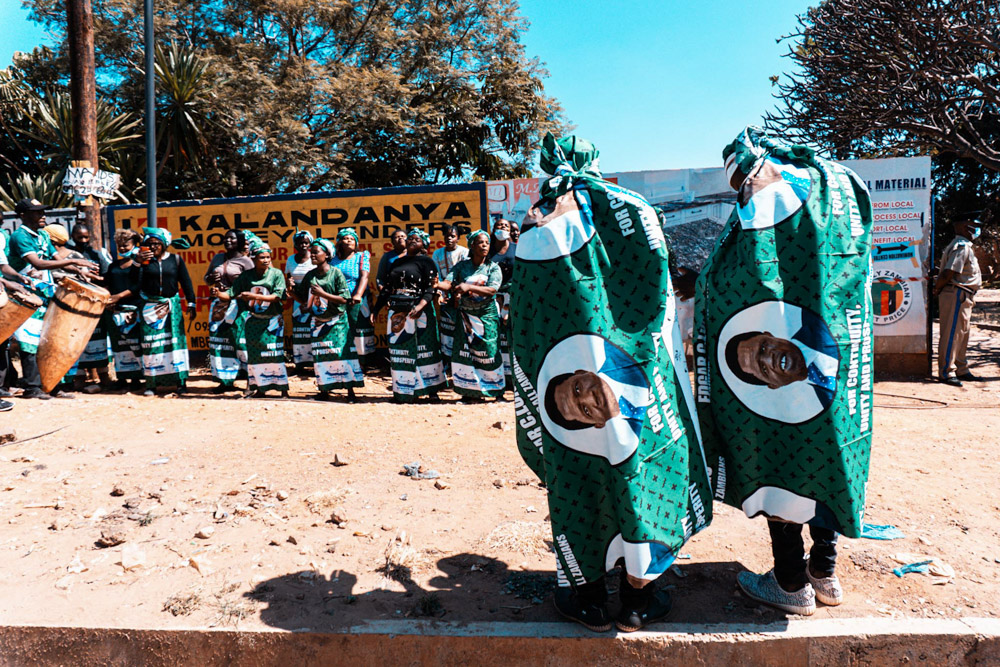
Two parties were using Western financing to compete
However, Western support through multi-year, multi-donor electoral projects delivered by organisations like International IDEA, the International Foundation for Electoral Systems [https://www.ifes.org/zambia], and the United Nations Development Programme (UNDP) was, at the same time, also enabling the Lungu-dominated state to hold the elections in the first place. In practice, this meant that two parties were effectively using mainly Western financing to compete against one another. A report by Transparency International Zambia showed that the abuse of state resources and private financing cast a shadow over the electoral process.
Basket funds
Itemised budgets for donor-supported election projects in Zambia are extremely difficult to find. This is largely because much of EU and other Western funding is channelled through international implementing partners, such as those mentioned above, which collaborate to establish so-called “basket funds” and joint programmes. Where funding amounts are disclosed—which is often not the case—these arrangements are ultimately accountable only to their respective head offices.
While these organisations all purport to work with “government and civil society” and hold press conferences announcing multi-year projects to “ensure free and fair elections”, a more in-depth look at the above shows that IDEA and IFES don’t focus on civil society but instead on strengthening electoral state agencies and observer projects. ECES, the European Centre for Electoral Support, in 2024 announced grants for “elections support for national institution and actors” under a new “Pro-DEM” project in the run-up to the 2026 elections, but didn’t say how much money the project involved and did not clarify what proportion of the funding would go to the Zambian state versus non-state actors.
The lion’s share goes to the state
The United Nations Development Programme (UNDP), which has been running a partly EU-funded programme titled Democracy Strengthening in Zambia, and its sequel, Deepening Democracy, geared towards the 2026 elections, has also not made its budgets available to the public.
Prioritising
An in-depth internet search on UNDP’s “Strengthening Democracy” expenditure eventually surfaced three Excel sheets focused on elections: for 2015, 2021, and 2025. The total budgets reflected in the sheets amounted to approximately US$10 million for both 2015 and 2021; for 2025, the figure was US$6.5 million. Roughly 90% of each budget was allocated to institutions such as the Electoral Commission, the Zambian Police, and other Zambian state structures, primarily for workshops, training, and conferences. Only 10% was allocated to grants for civil society organisations.
In 2021, UNDP announced at a press conference that it was channelling the equivalent of US$800,000 to 18 civil society organisations for “voter education”, but omitted to state that the lion’s share of its then US$9.7 million budget was again directed towards the state.
Asked to comment, the UNDP did not dispute our estimate of a 90–10 per cent division in favour of the Zambian state in its election expenditure, but said that “significant reductions in global development assistance” had “substantially constrained available resources”. It “therefore had to prioritise limited resources towards safeguarding the core functioning of elections, (including) the Electoral Commission of Zambia, which is constitutionally mandated to administer elections.”
Counting Euros
An internet search on donor contributions to UNDP “basket” funding revealed a consistent pattern of the EU being the largest donor. We were, however, unable to identify a specific proportion contributed by the EU to the basket. Based on Europe’s interest in the African continent—which is likely to be significantly greater than that of other donors such as the US and Japan—we estimated its share at around half. This led to an estimated EU contribution of approximately €9 million to Zambia’s US$16.5 million UNDP baskets covering both the 2021 and 2026 elections.
To arrive at an estimated total amount paid by the EU into Zambia’s 2021 and 2026 election cycles, we added the above €9 million to the two special EU projects mentioned above. Setting the EU’s 2024/2025 Pro-DEM project at the same level as the 2021 EU elections project (€7 million), we arrived at an estimate of €14 million for the two special projects. Adding €9 million and €14 million together then gives an estimated total of €23 million.
That sum, added to the €8.5 million reported by the EU in Brussels between 2020 and 2026—which excluded direct EU projects as well as the UNDP baskets—generated an estimate of total EU funding of €31.5 million for both elections.
We were unable to find total election funding amounts from entities such as International IDEA and the International Foundation for Electoral Systems (IFES), to which the EU also contributes.
Monitoring and observing
Some NGOs have expressed satisfaction with the work they were enabled to do through grants such as those provided by the UNDP. Peter Mwanang’ombe, Programme Director for the Christian Churches Monitoring Group (CCMG), says that his organisation’s mission to “enhance acceptability of election results” in 2021, through the deployment of 330 long-term observers and over 1,500 short-term monitors, alongside a parallel vote tabulation, was “to a large extent achieved.” Grant funding also enabled NGOs such as the Chapter One Foundation and Transparency International Zambia to produce election observer reports.
However, all grants to NGOs that could be traced were allocated to objectives such as election observation and voter education, rather than to broader democratic activity, public debate, or grassroots activism within Zambia’s urban and rural communities.
“We hear about the funding, but it doesn’t reach us”
“We hear about the funding, but it doesn’t reach us,” said a Kasama-based community activist who asked to remain anonymous. “It goes to big organisations. At community level, we are left out.” Others echoed this sentiment, expressing doubt that the system itself can be trusted. They said international support would have a greater impact if it reached local communities directly, or if it strengthened credible watchdog organisations that are both capable and independent.
Blocking a newcomer
There has been at least one substantial effort to change the system during this election cycle. Early this year, a civil society platform called the Movement for National Restoration, led by constitutional lawyer John Sangwa, amassed one million signatures in support of its plan to contest the elections. Its goal, it said, was to form a government that would address “decades of waste, mismanagement, and missed opportunities.” To safeguard its independence from donors with vested interests, the MNR and Sangwa asked Zambian citizens to fund the campaign.
However, on 12 April 2026, Sangwa withdrew his candidacy, stating that the MNR’s application for registration as a political party had been rejected by the Zambian Registrar of Societies and that, moreover, the police had refused permission for the movement’s planned ‘consultations’ in towns across the country. Permission had been refused “on the sole ground that the movement was not yet registered as a political party,” Sangwa said in a press statement, adding that “this created a circular barrier to the Movement’s activities: the police declined to ‘clear’ the programme because the Movement was not registered, while the Registrar insisted on police clearance as a precondition for registration.”
In the same statement, Sangwa said that the MNR’s quest for citizen funding had also been unsuccessful, since “many individuals were reluctant to contribute through formal channels due to concerns about the visibility and traceability of such contributions.” According to MNR sources, businesspeople in particular were wary that bank transfers could be traced by those in power, and that their businesses might suffer as a result.
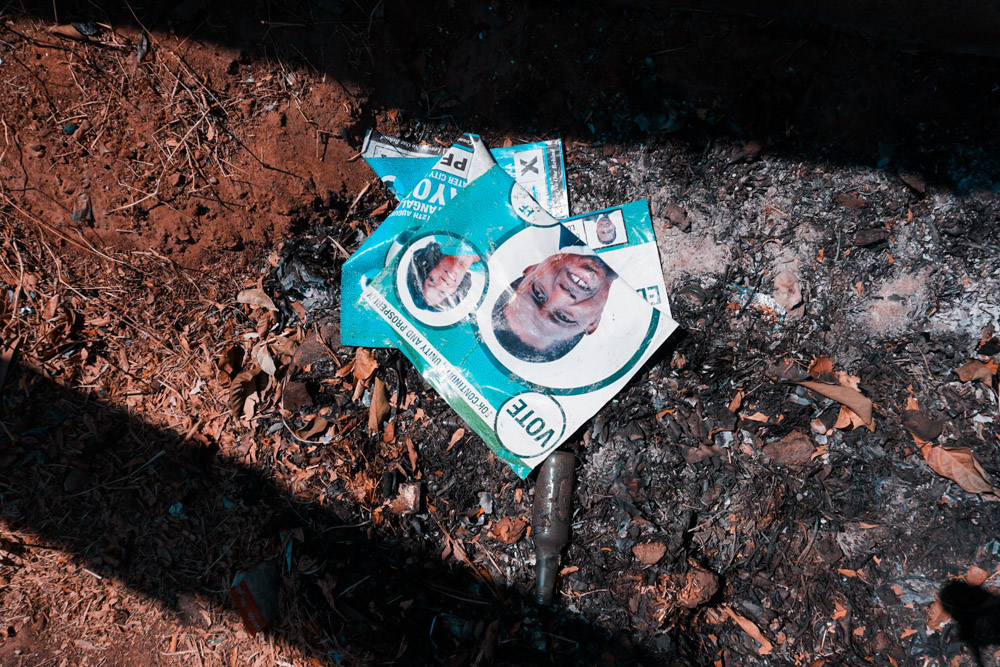
The president did not respond
Sangwa also said that he raised his concerns with the president in a letter, but did not receive a response. He ended his statement with an exhortation to “all citizens—particularly the younger generation—to uphold and advance the values of constitutionalism, accountability, and national discipline, and work towards a Zambia that serves all its people, not a few.”
Shifting priorities
During this investigation, several sources emphasised that genuinely Zambian-tailored reform is urgent because of shifting priorities on the side of donors who have historically extended aid to Zambia. The United States, in particular, has recently been observed moving away from funding civil society intermediaries towards more direct engagement with government. A US envoy told Zambian partners that “we are removing the middleman”. In contexts such as Zambia, such shifts risk further concentrating resources within already powerful state institutions.
A set of questions was sent to the EU Delegation in Lusaka on 4 March 2026 regarding funding flows and measurable outcomes. Although a response was promised by 18 March, none had been received at the time of publication.
- The Public Order Act is soon to be replaced by a new Public Gathering Bill that, according to government promises, will allow for freer public meetings.
See all the instalments in this Transnational Investigation here
Elections circus
Nigeria | Technology 0, politicians 1
Uganda | A humanitarian veneer
Ivory Coast | A mirage of democracy
Kenya | Sound and fury
Jimmy Kitiro | When aid helps autocracy
Call to Action
ZAM works towards a new equal relationship between Africa and Europe. Contribute to our mission by donating.