
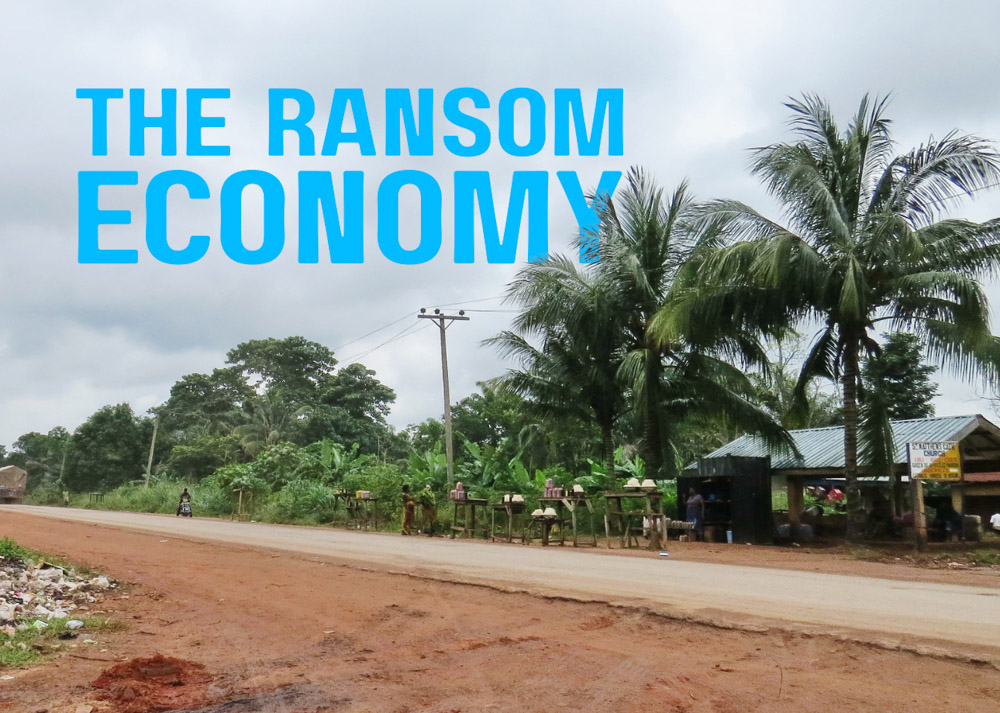
Kidnapping syndicates run rampant in Nigeria, extorting vast sums of money from victims’ families. There are measures that could be taken to fight the scourge. But state neglect and the prioritisation of unnecessary arms contracts over suitable strategy cause Nigeria to sink ever deeper into its security quagmire.
On Sunday, 14 June 2026, at the popular Vegetable Market along Airport Road in Benin City, Edo State, a woman was kidnapped by gunmen in front of a stunned crowd of traders and shoppers.
The woman had just returned from church with her husband and children and had left them in the car while she shopped at the market. On arrival, the gunmen blocked the family’s car before getting out of their vehicle. They shot at and punctured two of the car’s tyres, then opened fire to discourage anyone from intervening. They dragged the woman’s husband towards their vehicle, but he managed to fight them off and flee on foot. The gunmen then turned their attention to the woman, forced her into their vehicle and drove away, firing shots into the air to frighten approaching drivers and clear the road for their escape. The entire incident unfolded as shoppers, traders and nearby security personnel scrambled for safety.
Police were less than four minutes away
Meanwhile, the Edo State Police Command headquarters was less than a four-minute drive from the Vegetable Market. Given the nature of traffic on Benin’s roads, police would have had a reasonable chance of reaching the scene and attempting to rescue the victim. But this did not happen.
Victims of Nigeria’s kidnapping-for-ransom epidemic, carried out by a range of syndicates, from Islamic fundamentalists to cultist groups (1) and ordinary criminals, are, despite belligerent speeches by political leaders, heavily promoted security projects and a Terrorism Law, largely left to their own devices. In the northern region alone, Amnesty International documented at least 1,100 people abducted between January and April 2026, a figure the organisation itself warns is likely an underestimate, given how many abductions in remote communities go unreported.
The golden window
In case after case, the same failures in fighting the scourge emerge. An operational alert system exists largely in press releases, but is dysfunctional in practice. There is little surveillance infrastructure capable of tracking suspects on the move, while police often lack the vehicles needed to intercept perpetrators before they retreat into remote areas.
Security researchers and emergency-response protocols worldwide point to a “Golden Window”, the first 60 minutes after an abduction, as the period when victims are most likely to be reached before being moved into deep forest or safe houses. In Nigeria, that window closes almost by default. When a kidnapping occurs, families or eyewitnesses can spend critical hours calling fragmented local police numbers, contacting vigilantes or posting on social media — standard infrastructure for citizens to reach emergency services remains inconsistent and unreliable across the country.
Some calls yielded only silence
Though an emergency dispatch system was mandated 23 years ago, in 2003, under Section 107 of the Nigerian Communications Act, and formally activated in 2019, it remains largely obscure to the general public. The hotline was intended to capture immediate, real-time information such as kidnappers’ vehicle descriptions, number plates and escape directions. Yet independent field testing conducted during this investigation revealed persistent dysfunction, with some calls from other states yielding nothing more than silence or failing to connect at all.
Two emergency-line operators reached by phone insisted that the infrastructure was “stable” across all service providers in all 24 Nigerian states officially equipped with so-called Emergency Communications Centres. The operators attributed any disruptions to general telecommunications network instability — a puzzling claim given that standard voice calls on those same devices and networks functioned flawlessly.
The last press release celebrated the hotline’s “successful implementation”
The agency responsible for the hotline, the Nigerian Communications Commission, did not respond to emails querying its functionality. The last press release mentioning the call centres, dating back to 2022, still celebrates the network’s 'successful implementation.'
To date, the flawed hotline remains Nigeria’s only strategic answer to the security emergency.
Broken-down patrol trucks
The nature of the sorely needed priority resources would seem apparent to any Nigerian citizen who has ever dealt with, or simply encountered, the Nigerian police force. Police officers are often seen stranded at their stations, with little more than a broken-down patrol truck at their disposal. It should be an obvious conclusion for Nigeria’s leadership that the police, as the institution responsible for pursuing criminals, including kidnappers, must be equipped with functional vehicles, preferably fitted with encrypted radios and in-car mobile data terminals capable of transmitting live coordinates from a functional emergency dispatch centre. Such rapid-response units, backed by reliable, armoured pursuit vehicles, could establish immediate roadblocks along kidnappers’ escape routes and intervene before victims disappear into remote terrain.
Criminals face an incredibly low risk
A second reasonable priority would be a network of off-grid, solar-powered CCTV nodes equipped with automatic licence plate recognition. Such infrastructure could help trace suspected kidnappers’ movements across regional road networks and map their likely destinations in real time, reducing reliance on easily bypassed or compromised human checkpoints.
Mass-scale abductions now succeed because bandits can move large groups of captives across state borders without encountering a single functional camera. Kidnapping has scaled into a multi-billion-dollar “ransom economy” precisely because criminals face an exceptionally low risk of immediate interception. The only significant threat they face is a police force that launches feeble, reactionary rescue operations in dense forests, often weeks after the abductions.
Lacking a coherent strategy or equipment such as the above, police and military responses to mass abductions have so far been only incidentally successful. In early July, Nigeria’s military rescued 44 of 46 pupils who had been abducted in Oyo State by gunmen affiliated with the Islamist militant group Boko Haram. However, 78 children abducted by the same group in May in Borno State remain missing.
In the Edo Vegetable Market case, on 18 June 2026, four days after the abduction, police arrested one suspect during a gun battle and killed another. Three more suspects were arrested days later, on 20 June. A vehicle, a shotgun, a motorcycle and ₦2.25 million (US$1,700) in cash were recovered in total. However, the rest of the syndicate remains at large.
Repeated emails to the NPF asking whether it had ever formally requested better vehicles and tracking equipment went unanswered. Its listed telephone numbers were either incorrect or did not respond.
Banning ransom
Nigeria’s government’s only law so far specifically intended to counter the rising wave of insecurity has been the 2022 Terrorism (Prevention and Prohibition) Act, which institutes harsher penalties for terrorist acts. These are broadly defined as actions that endanger life, cause serious bodily harm, intimidate the public or compel a government to act, when carried out to further a political, religious, racial or ethnic ideology. Section 21 of the Act criminalises the intentional funding of terrorist organisations. In practice, this provision could potentially reclassify ransom payments made to kidnapping rings as a form of terrorism financing, exposing desperate families to potential life imprisonment.
Families now pay in total secrecy
However, instead of reducing the financing of kidnapping, the effect has been to alienate victims’ families — even in criminal “non-terrorist” cases (2). Faced with the threat of legal prosecution on top of an already acute family crisis, relatives reportedly routinely shut out law enforcement, choosing to pay ransoms in total secrecy. According to data released by the National Bureau of Statistics, Nigerian households paid more than ₦2.23 trillion (over US$1.6 billion) in ransom to kidnappers between May 2023 and April 2024 — a full year after the Terrorism (Prevention and Prohibition) Act took effect.
Unsafe Schools
Tragically, children in schools have been specifically singled out for mass kidnappings and attacks in Nigeria. To counter this threat, the “Safe Schools Initiative” was launched on 7 May 2014 by the federal government under then-President Goodluck Jonathan, in partnership with the UN’s Special Envoy for Global Education, Gordon Brown, and the Global Business Coalition for Education. Initiated with a US$10 million fund to pilot security upgrades in 500 schools across the north, it later expanded into a ₦144.8 billion (around US$314 million at the time) national financing plan, promising perimeter fencing, solar-powered lighting, trained security personnel, surveillance technology and early-warning systems for the country’s most at-risk schools.
Beyond the initial US$10 million, the initiative drew international donations throughout 2014 and 2015 — US$1.5 million from Norway, US$1 million from the African Development Bank, £1 million (US$1.37 million) from the United Kingdom, US$8 million from Switzerland, US$2 million from the United States and US$2 million from Qatar. Alongside this, a separate ₦80 billion (US$494 million at the time) was raised domestically through a structure known as the Presidential Committee on North-East Intervention — the same body that has overseen the Safe Schools Initiative alongside its broader North-East development mandate.
However, by the government’s own accounting, that money has not translated into protected schools. Data from the National Financing Plan shows that more than 42,000 primary and secondary schools across northern Nigeria still lack perimeter fencing — the most basic feature the initiative claims to provide. This includes 4,270 secondary schools across 21 northern states and the FCT, and 38,684 primary schools. As of 2020, only 43 schools were confirmed to be benefiting from the programme, covering roughly 2,000 students, a fraction of the tens of thousands identified as being at risk. No public deadline for completion appears to have ever been set.
When asked to comment on the gap between funding and outcomes, an official at the Federal Ministry of Education — after several unanswered emails — finally promised by phone to respond, but did not.
In July 2026, the Nigerian Senate opened a sweeping investigation into the initiative’s billions in disbursements, echoing long-standing demands from the Socio-Economic Rights and Accountability Project (SERAP) for an accounting of the US$30 million initially raised for the programme.
Death warrants
Like the “No Ransom” law, some authorities in Nigeria also seem more menacing on paper than in real life. Edo State governor Monday Okpebholo, for example, has publicly declared that he will “personally sign death warrants” for anyone convicted of kidnapping under amended state laws (3). Several other states in Nigeria’s federation are updating their own sub-national criminal codes in the same direction, replacing prison terms with mandatory capital punishment for kidnapping and related violent offences. Lagos, Akwa Ibom, Ebonyi and Cross River have each established statutory provisions prescribing the death penalty for abduction, particularly where the victim dies. But it is questionable whether such threats will have much effect as long as the state lacks the operational capacity to intercept perpetrators in the first place.
The security budget outspends education, health and infrastructure
The failure to manage emergency responses or secure national highways does not stem from a lack of funding. There is significant money in the security budget, and it has been rising steadily for years, from ₦1.5 trillion (around US$3.6 billion) in 2021 to ₦6.85 trillion (around US$4.7 billion) by 2025, according to BudgIT. These figures should be interpreted with some flexibility, since Nigerian security spending is reported differently depending on whether figures refer to the proposed, approved or supplementary version of a given year’s budget, often without outlets specifying which. Compounding the problem, the federal government’s own budget portal is not reliably online. However, expert observers agree that Nigeria commands a security budget of several trillion naira with which to protect its roughly 243 million citizens.
A poor substitute
For years, security and defence combined have ranked as the second-largest single line item in Nigeria’s federal budget — behind only debt servicing — consistently outspending education, health and infrastructure combined. Yet most of this budget prioritises military defence over security needs, such as those of the police and civil defence operations. This is despite the fact that Nigeria’s dominant security threats are internal, while any conventional foreign threat is virtually non-existent.
The result is an underfunded police force, ill-equipped for the internal security work it is meant to do. At the same time, an overfunded military is repeatedly pulled into domestic policing roles. Built for territorial defence, it is a poor substitute for the fast, localised response this scourge demands.
The government is buying 24 fighter jets
Secondly, within the defence budget, foreign procurement deals aimed at high-altitude warfare consume a significant share. At present, the government is funding a massive US$1.4 billion acquisition of 24 Italian M-346FA combat jets and 10 AW109 attack helicopters from Leonardo — the largest single military aircraft purchase in West African history — alongside Chinese Wing Loong II combat drones and American attack aircraft. Officially, this hardware is intended for counter-insurgency operations against Boko Haram and its fellow Islamist militant group, ISWAP, in the northeast. But it is doubtful whether kidnapping cases, including those involving Boko Haram and ISWAP, can be effectively fought with jets flying high above the forests.
Procurement of military hardware as a knee-jerk response to security problems in Nigeria was already highlighted in a Transparency International investigation into a 2016 arms procurement scandal. The investigation found that billions of dollars earmarked for military hardware had been funnelled through shell companies to benefit the then-ruling party’s political network ahead of the 2015 elections.
The government benefits from the problems
Associate Professor and Director of Abuja’s School of Social and Political Thought, Dr Sam Amadi, believes that the government’s security policy choices are still overwhelmingly informed by a “demand for procurement”. He says that “if there was a diagnosis of the security crisis, this might reveal insider dealing and point to the role of key individuals in sustaining the problem.” Amadi adds that “the (government) team in charge also lacks competence. But even where the intellectual clarity and commitment required for strategic thinking exists, the demand for procurement overwhelms it. Government buys equipment even when the need has not been established.”
Generally, Amadi notes, Nigeria’s government lacks the political will to deal with the security crisis properly, and citizens should not expect solutions to come from it. “The people in charge do not seem to care about solving problems. They probably want to benefit from the problems.”
Asked whether corrupt political elites in Nigeria are a colonial legacy, Amadi responds that “misuse of resources and public finance by governing elites did not come with colonial rule, but it has been aggravated by colonial rule. The legacy of autocracy needs to be dismantled (to make way for) effective accountability frameworks that discipline abusive and autocratic behaviour.” He sees “community networks” that instil “cultural and ethical norms” throughout Nigeria, from the grassroots upwards, as a possible way forward.
Meanwhile, even homes have become unsafe, with citizens routinely abducted from their own living rooms. On 7 June 2026, a brutal home invasion in the Kubwa area of Abuja saw heavily armed criminals breach a private residence, murder a resident in his own apartment and abduct his younger brother.
ZAM emailed the National Communications Commission, the Office of the National Security Adviser, the Nigerian Police Force (NPF) and the Federal Ministry of Education twice, requesting comment. We specifically asked the NPF whether the acquisition of fighter jets would help capture kidnappers. We followed up by phone, but received no response through that channel either.
Footnotes
- Cultist groups in Nigeria are illegal secret societies that began on university campuses as student brotherhoods, known as confraternities, and have since evolved into violent criminal networks.
- His concomitant request to establish a dedicated tribunal division — Special Criminal Court 1 in Benin City — mandated to fast-track kidnapping and syndicate-linked trials was approved on 26 June 2026 by Edo State’s Chief Judge.
- While, in theory, a family could argue that their loved one was being held by ordinary criminals rather than terrorists, they may not be aware that they can do so, since the “No Ransom” law has been widely publicised as a blanket ban on the payment of ransom.
Mistus Elordie is an independent investigative journalist, essayist, and poet based in Nigeria, whose work focuses on structural critiques of legislation, gender bias, and systemic discrimination.
Call to Action
ZAM works towards a new equal relationship between Africa and Europe. Contribute to our mission by donating.