
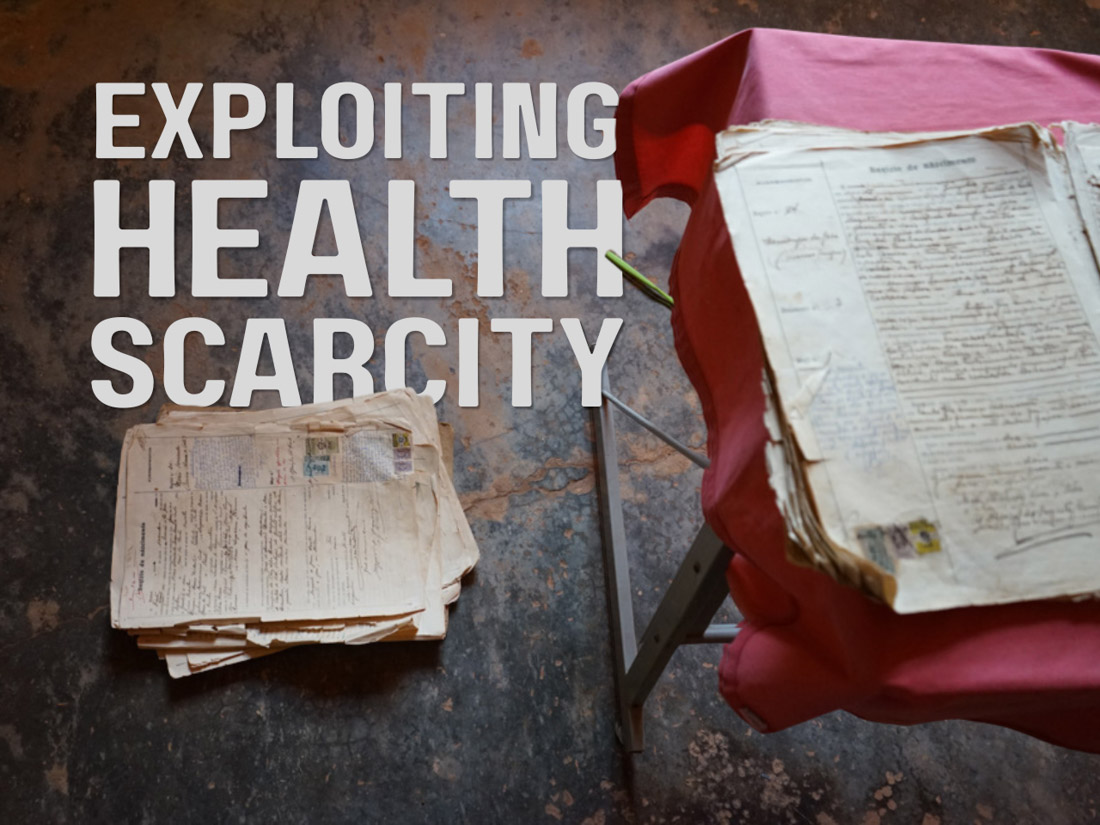
Why was a study funded by the U.S. Department of Health and conducted by Danish researchers set to be carried out on infants in Guinea-Bissau, one of Africa’s poorest countries? Anthropologist and reproductive health researcher Molly Fitzpatrick examines the reproductive politics underlying the cancelled vaccine trial, which was investigated for ZAM by Samba Baldé (1).
During a 2023 episode of her podcast Vaccine Curious, Danish researcher Christine Stabell Benn lamented that a randomised controlled trial of a recommended vaccine — in which one group would not receive the vaccine — would quickly be deemed unethical by the international community, particularly if conducted in a low-income setting. Yet just three years later, at the beginning of 2026, Benn and her husband, Peter Aaby, received a US$1.6 million grant from the U.S. Department of Health to conduct precisely such a trial.
Highly controversial
The couple planned to medically test the Hepatitis B vaccine by administering it at birth to 7,000 infants, while another 7,000 infants — the so-called control group — would receive it only after six weeks. This approach is highly controversial, as the Hepatitis B birth dose has been recommended by the World Health Organisation (WHO) since 1991 and is considered critical for preventing mother-to-child transmission. More concerning still, Benn and Aaby’s trial was to be conducted in Guinea-Bissau, which has one of the highest Hepatitis B prevalence rates in the world, at approximately 12%.
The funding could have provided full coverage for all babies
A lack of resources and funding in Guinea-Bissau means that infants are currently vaccinated only at six weeks of age, rather than at birth. While the official justification for conducting the study in Guinea-Bissau was that the control group would still receive the country’s existing, albeit limited, standard of care, the WHO rightfully pointed out that the trial would amount to “exploiting scarcity” within a severely constrained national healthcare system.
Critics further noted that the funding allocated to this study, seemingly intended to reassess a vaccine already established as safe, could instead have provided comprehensive vaccine coverage for all infants in the small African country for several years. As Benn herself had predicted shortly after the trial was announced, widespread condemnation from the global scientific community over the study’s unethical design ultimately led to its being ‘suspended pending review’.
Tuskegee
When viewed through a postcolonial lens, the trial appears to be more than merely a case of questionable research design. Comparisons with the Tuskegee experiment, conducted in Alabama between 1932 and 1972, in which Black men from lower socio-economic backgrounds were denied treatment for syphilis, resulting in 100 deaths, highlight the importance of situating the choice of Guinea-Bissau within the broader historical context of scientific experimentation on Black bodies.
The case shows how unethical medical research conducted in Africa, ostensibly in the name of science, can be used to cast doubt on vaccine recommendations, destabilise scientific consensus, and fuel conservative political agendas. In this sense, the trial reveals a form of reproductive racism in which the bodies and futures of Black women and children become the terrain upon which Euro-American conservative vaccine politics are advanced in the name of choice and autonomy.
Nonconsensual experiments have long exploited Black women
Going back further to the 1840s, the exploitation of Black women through non-consensual experimentation helped lay the foundations of reproductive medicine. As historian Deirdre Cooper Owens details, the so-called “father” of American gynaecology, J. Marion Sims, performed repeated operations without anaesthesia on enslaved Black women. In her book Medical Apartheid, Harriet Washington argues that this pattern of non-consensual experimentation simply shifted to the African continent once such practices were no longer allowed in the United States.
Depo Provera, HIV and Pfizer
Indeed, the unethical vaccine trial brings to mind similar studies, such as the clinical trial of Depo-Provera in what is now Zimbabwe in the 1970s, which was followed by a population control programme that reportedly used Depo-Provera to specifically target Black women working on white-owned farms. In the 1990s, Zimbabwe again became the location for a study on mother-to-child transmission of HIV/AIDS, in which women were given a placebo without proper informed consent: International Protection of Persons Undergoing Medical Experimentation: Protecting the Right of Informed Consent. As a result, a reported 1,000 babies contracted HIV, despite the existence of a proven, life-saving regimen at the time.
Another well-known case is the Pfizer trial conducted in Nigeria in the 1990s, in which a new drug for treating meningitis was administered in a study carried out without ethical clearance, resulting in the deaths of eleven children, with dozens more experiencing blindness, deafness, and brain damage.
Mothers hope for care for their children
What is striking about these examples is that they predominantly concern women and children and are often related to reproduction and sexually transmitted infections. Women and children are particularly vulnerable to such experimentation because of their relative powerlessness in patriarchal societies. Indeed, mothers may be more likely to consent to or participate in these unethical studies if there is even a possibility of accessing much-needed care for their children. As with all reproductive medicine, moreover, there is an intensified moral politics at play, as individuals negotiate not only their own health but also that of future generations.
“Non-specific effects”
While most randomised controlled trials aim to advance scientific knowledge and expand the reach of life-saving interventions such as vaccines, the trial in Guinea-Bissau was designed to contribute to research on what Danish researchers Peter Aaby and Christine Stabell Benn have termed the “non-specific effects” of vaccines. As Aaby and Benn lead the Bandim Health Project, which was set to serve as the location for the suspended trial, this controversial phenomenon warrants a closer look.
In a 2018 paper based on data from Guinea-Bissau, Peter Aaby and Inge Kristine Benn reported that young girls were more likely to die from other causes after receiving the diphtheria–tetanus–pertussis (DTP) vaccine. The study has been widely cited within anti-vaccine circles as evidence of harmful effects from established vaccines, and was referenced by Robert F. Kennedy Jr., then Secretary of the U.S. Department of Health and Human Services, during an appearance on Joe Rogan’s podcast in 2023. Within the scientific community, the study has been criticised for overstating its findings, and the concept of non-specific effects of vaccines remains contested. Nonetheless, it was precisely this hypothesis that the Guinea-Bissau Hepatitis B trial sought to investigate, and which motivated RFK Jr.’s interest in funding the research.
The researchers were excited about the re-election of Donald Trump
On another episode of their podcast, recorded in 2024, Christine Stabell Benn and her conversation partner, Tracy Beth Høeg, expressed enthusiasm about the re-election of Donald Trump, stating how excited they were for the four years ahead. Benn and Høeg emphasised their support for the Trump administration’s stated intention to reduce the number of childhood vaccines recommended by the CDC, with the aim of making the US vaccine schedule more closely resemble that of Denmark, a country 229 times smaller than the United States yet equipped with a highly developed healthcare infrastructure. The funding for Benn and Aaby’s Guinea-Bissau trial was announced just weeks after RFK Jr. implemented similar changes, including the removal of the Hepatitis B birth dose from the US childhood vaccine schedule.
Privileged parents
Such radical political positions have consistently been framed as reducing state interference and expanding the autonomy of all individuals. Yet, my research with “antivax” parents reveals a different side of this story. In 2025, I conducted fieldwork in Bali with travelling parents who do not send their children to school, the so-called “worldschoolers”. These parents claimed that they valued autonomy and self-reliance above all else. However, their “alternative” lifestyle was deeply reliant on the very privileges afforded by the systems they claimed to reject. This included, for example, the ability to travel freely between countries due to strong passports, to live at low cost in places such as Bali, Cape Town and Costa Rica while earning remotely from Europe, the United States, or Australia, and to opt out of mainstream schooling.
These choices were made within an unequal system
None of the parents I studied had vaccinated their children. As with their other lifestyle choices, they framed this as a matter of autonomy and (bodily) sovereignty. However, these decisions were made within an unequal system. These parents, like many in the Global North, benefit from the privilege of health. They live in communities such as Denmark, where many communicable diseases have been largely eradicated through vaccination, and they have the resources to cope with illness should it hit them.
Queueing for health
This is not the case for many people in the Global South, such as the women in Guinea-Bissau whom ZAM journalist Samba Baldé found queuing outside Aaby and Benn’s Bandim health centre, waiting for hours in the hope of receiving much-needed care for their children. Yet these are not separate phenomena: the choices made by, for example, worldschooling parents affect the bodies and futures of women and children in the global majority.
By choosing not to vaccinate their children, they may contribute to the spread of communicable diseases. And not just that, the political movement that encompasses both the worldschooling parents I studied and the Danish researchers, contributes to a broader global scepticism towards vaccines, with far-reaching consequences. The announcement of the trial in Guinea-Bissau coincided with the withdrawal of U.S. support for Gavi, the global vaccine alliance. Without this support, it is plausible that the rollout of the birth dose of the hepatitis B vaccine in Guinea-Bissau, initially planned for 2027 but already postponed to 2028, will face further delays.
Pro-and anti-natalism
All the above materialises sharply in the context of reproduction, which includes the vaccination of children. Reproduction is in crisis globally. Fears over declining fertility rates in the Global North have led to heightened pronatalist rhetoric in right-wing and white supremacist circles. This emerging form of conservatism is characterised by traditional gender politics and is marked by simultaneous attacks on LGBTQIA+ rights, the rollout of anti-abortion policies, and the rising popularity of the “tradwife” movement and similar ideologies. Just last Monday, Trump dubbed himself ‘the father of fertility’ at an event on maternal health held in the Oval Office, where he announced expanded coverage for IVF treatments. In a similar vein, Vladimir Putin has revived the soviet era “mother heroine” title, awarded alongside US$16,000 to Russian women who have ten or more children.
Trump dubbed himself the “father of fertility”
These developments limit reproductive and sexual freedom while reinforcing traditional gender norms. At the same time, anti-natalism remains prominent for women in the Global South and for women of colour in the Global North. An urgent example of this is the ongoing Israeli genocide in Palestine, where women and children bear the brunt of sustained state violence and are specifically targeted in attacks that some observers argue contribute to the decimation of the Palestinian population. In the U.S. and Europe, the persistently elevated maternal mortality rates among Black women and other women of colour highlight this same pattern of reproductive racism.
As anthropologists of reproduction have argued, pronatalist politics in the Global North cannot be understood in isolation from antinatalist violence in the Global South and against marginalised communities. In response to this dual dynamic, Black feminists in the United States developed the framework of reproductive justice. As first articulated by the SisterSong collective, its aims are simple yet powerful: to ensure that women have 1. the right to have children, 2. the right not to have children, and 3. the right to raise the children they have in safe and healthy environments. The case of Guinea-Bissau is a clear example of reproductive injustice, as women’s right to raise their children in safe and healthy environments has come under threat.
The vaccine choice
Yet this reproductive injustice is not limited to a single suspended trial. Using the Bandim Health Project as their base, Aaby and Benn have conducted decades of vaccine research and are likely to continue doing so in the future. Through Benn’s connections with Tracy Beth Høeg and Robert F. Kennedy Jr., as well as Benn and Aaby’s academic positions at the University of Southern Denmark, this research directly influences vaccine policy in the United States and Europe. In this way, Euro-American conservative vaccine policy becomes, in part, a product of the exploitation of Black women and children, who are not afforded the privilege or access to information necessary to make fully informed choices about their own bodies or their children’s health – the exact value that the antivax movement claims to promote.
The right to choose exists only for a few
The issue is thus no longer whether one should vaccinate one’s children, but rather who gets to decide who holds that privilege. This trial is but the tip of the iceberg of a broader systemic exploitation and racism that undergirds the new conservatism spreading across the globe — one in which choice and autonomy are celebrated, but only for a select few.
Dr Molly Fitzpatrick is an anthropologist working on global health, maternal healthcare, reproduction, and alternative (health) movements. She is a lecturer in anthropology at Leiden University and an associated researcher at the University of Zurich and the University of Amsterdam.