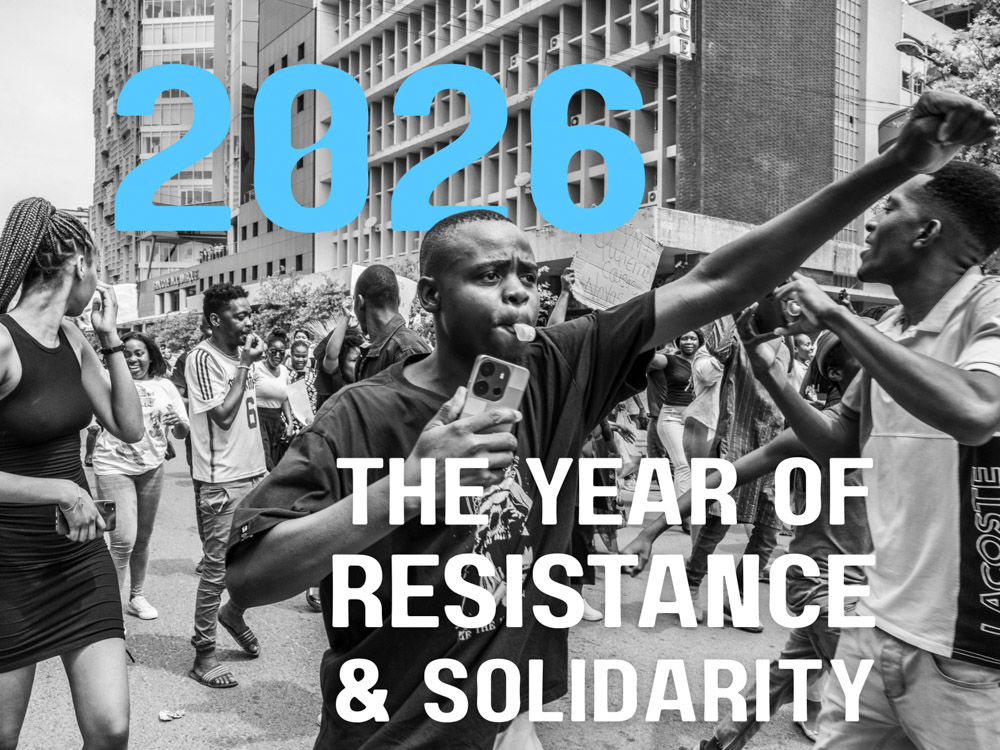
2025 was the year in which Gabon’s President Nguema returned from a visit to the White House wearing a MAGA cap; the Rwandan government struck a US$200 million deal with Donald Trump in exchange for American control over Congolese mineral resources; Sudanese warlords, backed by the United Arab Emirates, waged war while the international community remained silent, fearful of jeopardising its relationship with this oil-rich nation; Burkinabè President Traoré seized every opportunity to deploy anti-colonial rhetoric to deflect attention from his troops’ persecution of journalists; Tanzanian President Samia Hassan had 700 peaceful protesters shot dead by her security forces (a rare silver lining was the strength of the international response this time); white South African racists intensified their campaign to convince the world that they were victims of genocide; and the Somaliland government, in exchange for recognition, sold out its territory to advance Israel’s drive for the mass deportation of Palestinians.
The aforementioned are not unrelated. Ultimately, warlords, autocratic rulers, and white supremacists all defend their privileges, as well as the interests of those who sponsor them. Colonial rule in Africa formally ended in the 1960s, but the colonial tool of divide and conquer remains in full effect.
The forces of the old now defend themselves against the growing resistance of a new generation. In an increasing number of African countries, calls are being heard for democracy, for a government that delivers, and for an end to self-enrichment and the abuse of power.
Enter 2026. Our resolution? To amplify the desire for tangible change by telling stories from the hotbeds where it is taking shape. Let’s make 2026 a year of solidarity.
ZAM Team
Call to Action
ZAM works towards a new equal relationship between Africa and Europe. Contribute to our missionby donating.