Fishmeal helps power a global seafood boom while pushing pollution, depletion and unrest onto poorer coastal communities in Senegal and many other countries, a global investigation reveals.
On 20 August 2022, at least 50 protesters took to the streets of Kayar, Senegal, demanding the closure of a nearby fishmeal factory, Touba Protein Marine. Marching from the town’s fishing wharf to the plant, they held signs reading “Kayar is sick” and “Our water is contaminated”.
Broken pledge
Their grievances were many. Protesters said the Senegalese government had broken its pledge not to authorise any new fishmeal plants — factories that produce a lucrative dark-yellow powder by cooking and pulverising fish. They said Touba Protein Marine had been built less than a third of a mile from residential homes, triggering health problems and violating local zoning laws, according to government documents and satellite imagery. The stench, residents said, made daily life unbearable. “Harsh reality of the Global South,” wrote Serigne Mbaye in a Facebook post sharing the protest video.
The plant — owned until 2022 by the Spanish company Barna — was also accused of processing whole, fresh fish, undermining local food security. In a written response to questions, Senegal’s director of the Ministry of Fisheries, Fatou Diouf, said that using whole fish is currently legal. “There is no law prohibiting the production of fishmeal and fish oil from whole fish,” she wrote. “However, since [fishmeal] factories are limited in number, further control methods will be implemented to prevent them from processing whole fish.”
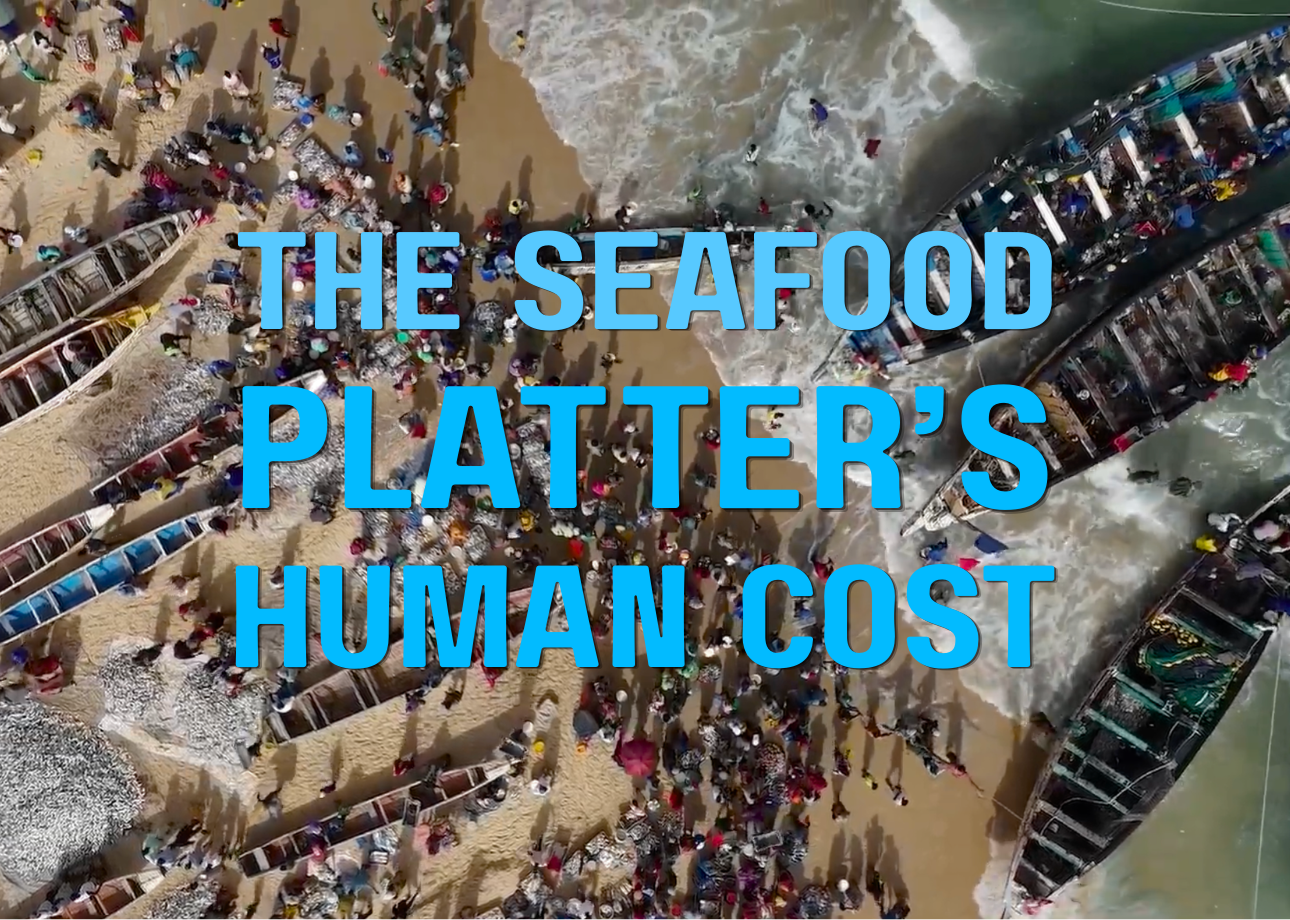
Much of the fish caught in Senegal’s waters is consumed by one of the six fishmeal plants operating along the coast. These factories cook and pulverise the catch to produce the lucrative dark-yellow powder used as feed for chickens, pigs and, especially, farmed seafood. Senegalese families that have depended on fishing for generations are now selling — or repurposing — their boats to flee to Europe.
“There’s no fish left here, so we left”
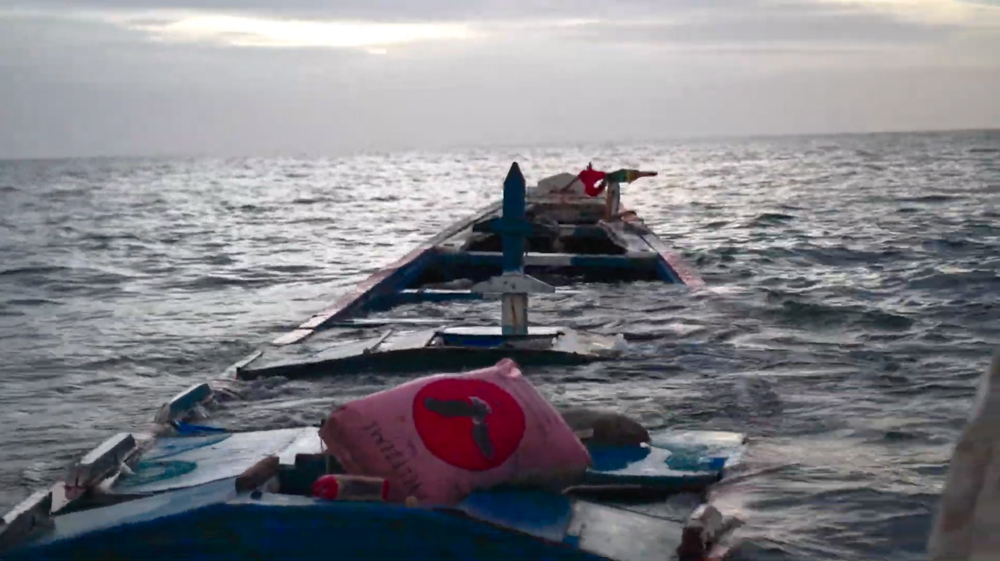
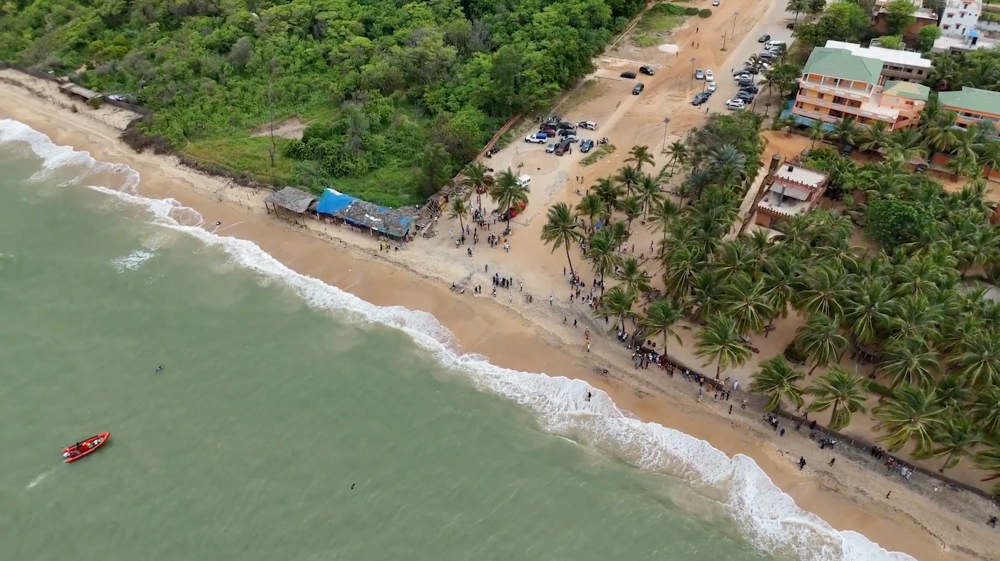
With few prospects at home, many Africans attempt the more than 930-mile sea journey from Senegal to Europe’s nearest touchpoint, Spain’s Canary Islands, a route that claimed more than 3,000 lives in 2025. “We’re fishermen, but there’s no fish left here, so we left,” Cheikhou Omar, a 21-year-old fisher, told us in September 2024 as he sat on a beach in Senegal, having been rescued after the fishing boat he took to reach Spain capsized, killing 30.
Environmental violations
From July 2024 to March 2025, we visited three fishmeal plants in Senegal: Omega Fishing, Touba Protein Marine and St. Louis Sea Production. We interviewed nearby residents, plant managers and workers, whose accounts revealed a range of alleged violations and concerns linked to the factories. Omega Fishing, Touba Protein Marine and St. Louis Sea Production did not respond to requests for comment. Between 2018 and 2024, at least eight fishmeal plants in Senegal were linked to environmental violations, unsustainable fishing practices and repeated episodes of civil unrest, according to the Outlaw Ocean Project’s investigation in Senegal. During that period, the plants were accused of polluting the environment on at least a dozen occasions, including by dumping fish-processing waste onto nearby beaches and releasing smoke that residents said caused respiratory problems.
The industry is the fastest-growing in global food production
The fishmeal industry has brought millions of dollars in tax revenue and hundreds of jobs to Senegal while helping produce more seafood to meet burgeoning global demand. But it also drives food insecurity, as fish that once sustained local communities are increasingly diverted into fishmeal factories for export, not only in Senegal but also in The Gambia, Mauritania, and countries around the world. The scale of the industry is difficult to overstate: half of all seafood globally is now farmed, and most farmed seafood is fed fishmeal and fish oil. Aquaculture, a US$313-billion industry, is the fastest-growing segment of global food production.
Horrid stench
Our four-year investigation, conducted by dozens of journalists with The Outlaw Ocean Project, a Washington, DC-based news organisation, uncovered the loss of artisanal fishing jobs, chronic chemical exposure, avoidable worker deaths and violent protests spurred by the horrid stench from fishmeal factories in many poorer countries. The reporters mapped nearly the entire industry, identifying more than 1,400 fishmeal factories across 64 countries; traced supply chains from fishing vessels to processing plants, feed mills, fish farms and seafood retailers; visited factories and farms; and boarded fishmeal ships at sea. The investigation chronicled the hidden and displaced social costs that rarely appear on the balance sheets of the seafood companies that depend on the industry.
The fishmeal and fish oil industry took root in West Africa in the early 2010s, when foreign investment — largely from Chinese and European firms — poured into the region to build factories geared towards export markets in Europe and Asia. The result was a gold rush for small pelagic, or open-water, fish. By 2019, roughly 50 fishmeal and fish oil plants were operating across Mauritania, Senegal and The Gambia, collectively consuming an estimated half a million metric tons of fish each year, according to Greenpeace. Over the decade leading up to 2021, the industry expanded tenfold along the West African coast. Senegal alone had at least six operating fishmeal plants in 2024, clustered along the coast near Saint-Louis, Kayar, Dakar, Joal and Sandiara.
A global problem
The fishmeal industry poses a problem far beyond Africa. On remote islands in Russia’s far east and in China’s far inland western region, the investigation found forced labour on ships, at farms and in factories. In China, the reporting focused on 1,000 farms in Xinjiang, a region known for intense political repression. In India, the investigation found explosions, fires and worker asphyxiations at factories producing fishmeal that supplies the country’s shrimp farms. At one Indian factory, United Marine Products, government inspectors discovered in 2020 that plant operators had dumped wastewater into hidden boreholes, likely contaminating groundwater and making nearby villagers and livestock sick. At another, Bismi Aquatic Products, a migrant worker died in 2021 while cleaning a wastewater tank after passing out from the fumes. Bismi Aquatic Products did not respond to a request for comment.
In several countries, including India and Peru, the industry was linked to at least 80 incidents of civil unrest, some of them violent. The incidents, usually labour strikes and community protests, were sparked by water pollution or the stench from factories cooking thousands of tons of decomposing fish, according to Bait to Plate, an online tool that tracks the fishing and seafood industries.
Fishmeal also contributes to geopolitical tensions. In 2021, a dozen Turkish bottom trawlers fishing illegally in the Aegean Sea tried to ram a Greek research vessel when the scientists began filming their activity. In 2018, riots broke out in Saint-Louis, Senegal, after the Mauritanian Coast Guard shot and killed a fisher during what Mauritanian authorities said was a cross-border raid by a fishmeal boat. Since the mid-1970s, Morocco has militarily occupied Western Sahara, a presence that more than 10 EU Court of Justice rulings and various UN resolutions have deemed illegal. Still, Moroccan ships routinely fish in Western Saharan waters, turning their catch into fishmeal at Western Saharan plants before exporting it to farms globally, where it is labelled as Moroccan.
A violent clash over trucks, many of them carrying fish and fishmeal out of Western Sahara, led to the collapse of a 29-year ceasefire between the two sides in 2020.
Pressure on the oceans
The scale of fishmeal’s pressure on the oceans is colossal: more than a fifth of wild-caught fish around the world is used for non-human consumption, especially as feed for fish, but also for chickens and pigs. The investigation assessed more than 2,400 vessels tied to fishmeal production, operating in the waters of at least 30 countries. It found that most of these ships do not fully comply with the Global Charter for Fisheries Transparency, a guide created by leading ocean-focused civil society groups that sets out accountability standards for industrial fishing fleets. For example, less than 30 per cent of the fleet had publicly available location information, while fewer than 25 per cent had a unique vessel identification number, or ship licence plate. Such opacity makes the fleet difficult to police.
Bottom trawlers destroy virtually everything in their paths
Scientific studies classified at least half of the species landed by the assessed fishmeal vessels as “overexploited” or worse. Most of the ships in this fleet are purse seiners or trawlers, which deploy vast nets to capture dense schools of fish. Both gear types are associated with high levels of waste, routinely hauling in large volumes of bycatch and non-target species. At least 165 ships in the global fishmeal fleet were bottom trawlers, using a particularly destructive form of fishing in which weighted nets scrape the ocean floor, destroying virtually everything in their path. The problem of unsustainable fishing is compounded by heavy government subsidies that keep too many vessels operating, accelerating pressure on already stressed fisheries.
“Any accounting of the true impact of aquaculture has to start not with the farm, but with the feed [they require],” said Daniel Pauly, project director of the Sea Around Us initiative at the University of British Columbia. “And that kind of accounting offers a very different picture than the industry offers.” To reduce the industry’s reliance on wild-caught fish for feed, researchers have explored alternative protein sources, including seaweed, cassava waste, black soldier fly larvae and even single-cell proteins derived from fungi or bacteria, but none are yet affordable at scale. For now, the pattern persists: wild fish are caught and reduced into feed for seafood farms, while the costs of this production are paid elsewhere.
Endangered penguins
In South Africa, fishing vessels target anchovies specifically for fishmeal because, according to the country’s trade minister, the species in the country’s waters is too small and oily for human consumption. In doing so, the industry is taking a crucial food source away from the critically endangered African penguin. The stakes are high for the local economy, too: one penguin colony in Cape Town generates about US$16 million in tourism revenue each year. Scientists’ efforts to persuade the South African government to implement a law banning fishing within a dozen miles of the country’s largest penguin colonies paid off in January 2024, when the government announced a 10-year closure of commercial fishing in the waters around the colonies. British marine biologist Richard Sherley confirmed that the closures would likely slow the decline in the penguin population.
Imported sushi and food insecurity
South Africa also consumes a significant amount of seafood, and roughly half of all seafood eaten in the country in 2021 was imported, according to the South African Sustainable Seafood Initiative. Our investigation found that fish farms in several of the countries that export the most seafood to South Africa — including Namibia, Norway, China, New Zealand and India — face severe problems linked to fishmeal production. In 2025, South Africa imported more than US$30 million worth of seafood from China alone.
Most of the salmon eaten in South Africa, typically served as sushi in restaurants, comes from Norwegian aquaculture farms, which rely heavily on imported fish feed made from wild-caught fish. The feed given to this salmon is linked to a range of documented impacts, including food insecurity in West Africa, pollution from waste and chemicals, and the spread of parasites and disease to wild fish populations.
Meanwhile, Senegal’s food insecurity is likely to worsen. Between 2009 and 2018, the volume of small pelagic fish available in local markets fell by two-thirds, while per-capita consumption was cut in half. The FAO has warned that, by the mid-to-late 2020s, the population could face an annual shortfall of roughly 150,000 tons of fish for human consumption.
“Stay and go hungry, or climb into a boat and head north”
In Bargny, Fatou Samba, a 58-year-old fish processor, said the change could first be measured in meals. “Today, having three daily meals has become a problem, which has never happened to us,” she said. “We don’t think about saving money. We think about our survival.” As fish disappear into reduction plants and food becomes harder to afford, more families are confronting the same choice Omar did in 2024: stay and go hungry, or climb into a boat and head north.
“Our role is not to advise”
There are benefits to aquaculture. In India, it is a major source of employment, particularly for women. In Bangladesh, the expansion of fish farming has helped drive down prices, making seafood more affordable for poorer households. The industry is also a far smaller source of carbon emissions than beef or pork. Farmed shellfish, such as mussels, oysters and clams, remain comparatively sustainable because they require no feed.
However, more than two-thirds of farmed seafood still depends on feed derived from the sea itself. Global fishmeal consumption is projected to rise by nearly 10 per cent between 2022 and 2032, according to the Food and Agriculture Organization (FAO). Véronique Jamin, a spokesperson for the international fishmeal association, the IFFO, maintains that fish farming is “the most efficient animal protein system”, adding that her organisation’s “role is not to advise which markets should use fishmeal and fish oil”. “Sustainability frameworks won’t work if they ignore real-world economics,” she said, and seafood companies must respond to “what people actually want to buy and eat”.
(The reporting for this story was part of a larger investigation conducted by an international team of journalists based at The Outlaw Ocean Project.)
Call to Action
ZAM works towards a new equal relationship between Africa and Europe. Contribute to our mission by donating.