

“The people in Ogijo now trust us more than the government”
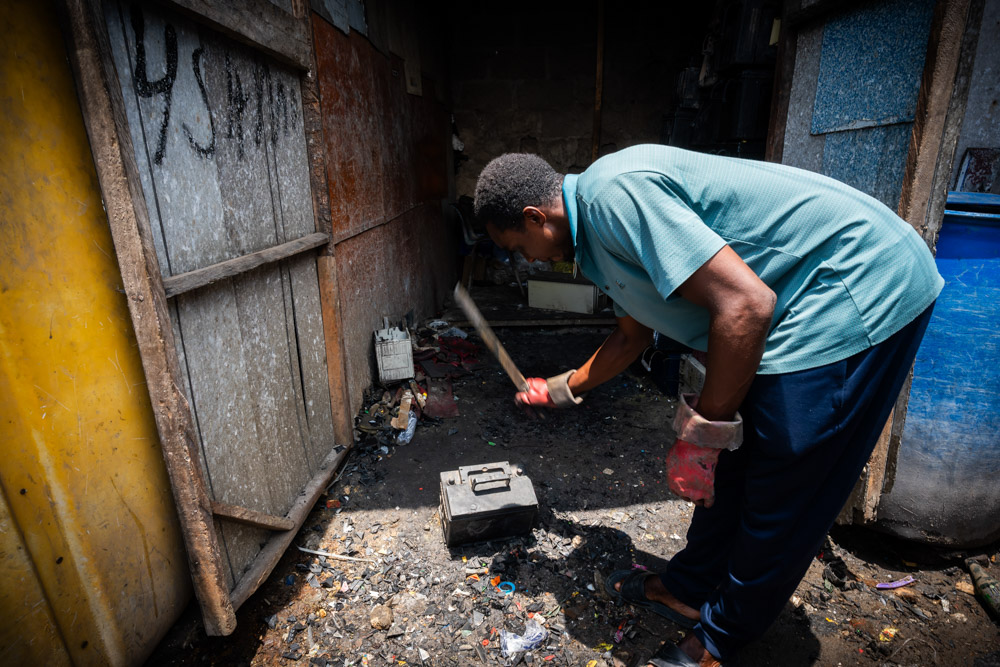
Battery recycling, often portrayed as a ‘green’ process that protects the environment, provides employment for many in the Ogijo community in Nigeria. Refurbished batteries from the town are sold to car manufacturers around the world. Yet while Western companies centre this recycled “green” solution in their marketing, unsafe production practices and regulatory violations have poisoned the very Nigerian communities where these batteries are processed. In Ogijo, a thick layer of lead dust blankets much of the town, and lead poisoning among residents has prompted doctors to ask how people there “could still be alive.”
Doctors questioned how some could still be alive
A recent cross-continental collaboration among journalists finally prompted authorities to take action (see links below). ZAM interviewed Olawoyin Oladeinde, the lead investigative editor at Premium Times in Nigeria, who partnered with the US-based The Examination to expose the massive health scandal.
ZAM: We understand that the idea to collaborate first came from the US side, where car manufacturers purchase recycled Nigerian batteries. The journalists noticed that in the US, little is known about the conditions in the places where these batteries are produced. Already familiar with Premium Times in Nigeria through international investigative journalism networks, and working with The Examination in the US, they approached you. What happened next?
Olawoyin Oladeinde: For this one, all credit goes to Will (Fitzgibbon) at The Examination. He started the research and then had conversations with our editor, Musikilu Mojeed, in 2024. Then in 2025 he came down to Nigeria; there was a battery industry conference in Abuja, the capital, at the time. We met there, and also with other relevant people, including the King of the Ogijo community. From there we started gathering additional data. Then in October last year, when we were almost done with the reporting, I met Will in Washington, and we discussed our publication strategy.
On radio in Yoruba
ZAM: What was unique to what Premium Times did?
OO: We are very close to the Ogijo community, so I was there first to get the narratives from the affected people. We also went to check on all the companies. The understanding was that we know the terrain better. I speak Yoruba, which is the community language. Meanwhile, Will and The Examination contracted a biotech company to test the workers and other inhabitants of the community. Both our teams had representation at the testing venues. The only thing we, as Premium Times, were not actively involved in was the interviews with the foreign companies in the US, because, of course, The Examination was there.
Then, following up in Nigeria, we at Premium Times handled the impact here. We went to the secretariat of the federal state of Ogun, where Ogijo is located. We travelled to the capital, Abeokuta, to speak with the Commissioner of Environment. We also spoke to academics and several other media institutions, who co-published.
ZAM: You were interviewed by a local radio station in Yoruba.
OO: In fact, that was the most impactful radio appearance we had on the project. People who were directly affected by the issue phoned in to tell us what was happening, what the government was doing, and the impact of the poisoning they were experiencing. That outreach was quite successful. I was also interviewed by The Examination for their newsletter.
The government pays more attention when outsiders speak
ZAM: The Nigerian authorities have closed some companies and started medical testing in the community. They stated that they will tighten regulations. But we understand that the situation had already been exposed in Nigeria before. Why did this project make a difference?
OO: Sadly, our government, like many governments in Africa, tend to pay attention more when outsiders speak to issues within the country. (Nigerian media house) Business Day did the story in 2018, and it had some impact then in terms of government reaction and everything, but not on the scale as we have seen in the last few months. It helped that a third partner, the New York Times, also came on board for this project. So the platforms have been quite influential, and that is what led to reactions of the government, the state, the regulatory agencies, some NGOs, and even some of the companies that were mentioned in the story. One US company mentioned they were going to stop doing business with one of the (local) companies we mentioned in the report.
Employment
ZAM: Closing companies may be good for the environment and public health, but are there concerns about employment?
OO: Yes. Ogijo is the biggest hub when it comes to battery recycling in Nigeria. The presence of this industry is very important to the community. People even come from outside the area for these jobs. We understand that public health is far more important than any economic gain, but there is a middle ground between jobs and public health. These companies can remain in the community if they operate within certain standards and comply with environmental regulations.
ZAM: In your investigation, one Nigerian company boss says, “You need to be dirty to compete,” because the other companies are dirty too. Can the Nigerian authorities enforce standards in a way that ensures all local companies comply with environmental and health regulations?
A company boss said they need to be dirty to compete
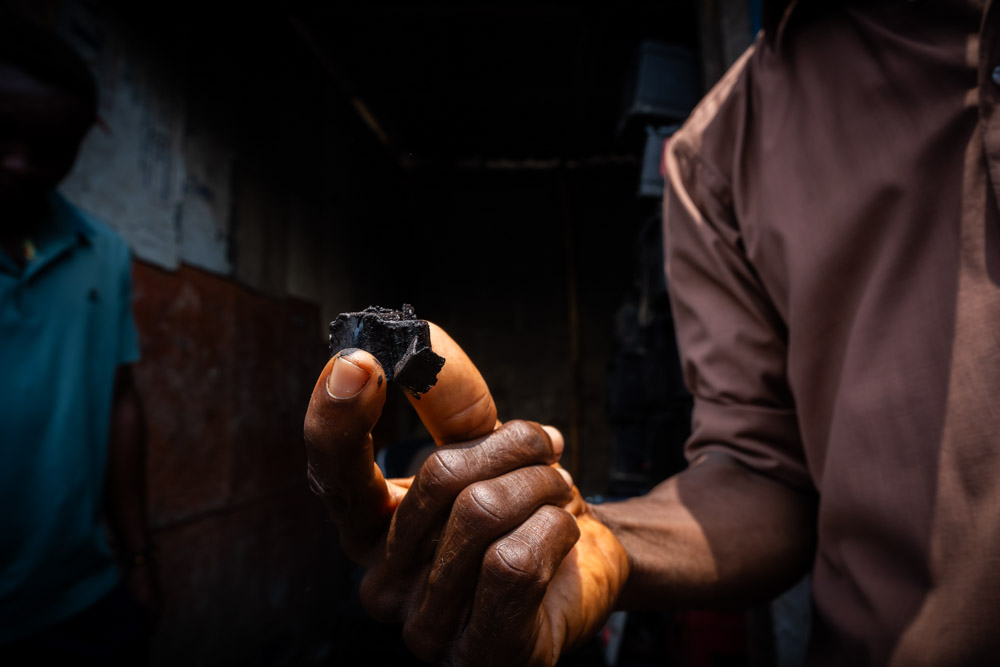
OO: I think the government can do this. The question is the will. As watchdogs, we journalists try to keep the government on their toes for their responsibilities, but they try to dodge them. They ask us for more evidence when we communicate complaints, then they say the evidence is not enough, and sometimes they claim that the company may not be logging the right information (about safety and pollution). But the real problem is that the regulators are colluding with the company. These regulatory officials get kickbacks (from the companies) and then list them as compliant. So it’s not that we don’t have regulations or laws. Nigeria has a battery law that says people working in battery recycling companies should be tested at least twice a year. Yet there are regulators who know that workers have not been tested for several years. In some instances, companies are supposed to provide workers with protective gear, but they don’t, and regulators look the other way. When we went to the state government, we explained that the best way to enforce regulations is to visit the companies unannounced.
“It’s not like we don’t have regulations”
ZAM: Premium Times and other media houses struggle to make an impact on the endemic corruption within state systems in the country. How do you plan to continue that struggle?
OO: We sometimes do undercover investigations. Undercover work can be controversial, but if you work in a system where government regulators themselves tell you that it is hopeless, you just have to do it. Because you know that what they say is not true. Most of the time, they are just colluding. It’s only when they fail to keep it quiet that they finally act, as we see now. But the danger remains that they won’t follow through, and it all goes back to normal a while later. I spoke to Will a fortnight ago, and we were both worried that — based on claims from residents — it appears the government is now just trying to save face. In fairness, the state government has been quite responsive. But we look forward to long-term, institutionalised solutions.
ZAM: Ministers were called before the Senate. There was a lot of noise.
Monitoring
OO: (Giggles) Yes, they were saying things in parliament, they are doing some testing now in the community, and they are communicating, talking to people, but we are not satisfied that all of this will lead to a long-term correction of the system. But we will be following up and calling them out.
ZAM: In what way?
OO: We are closely monitoring the situation. Since we published, we have attended meetings with the Commissioner for the Environment and other authorities in Ogun State. The government has also been giving us updates on what they are doing, almost daily. They appear to be trying to give us the impression that they are working, sending press statements every now and then. But we are cross-checking with the communities because we must verify. For example, initially they told us they were already testing (for lead poisoning), so we went back, and the people told us no, they had not started testing. We went back and said, “But you are not testing,” and then they replied, “We are trying to put it in place.” We knew we could not simply believe everything they told us.
We also have sources in the community. Sometimes we go there ourselves; sometimes we phone our sources to ask: the government says they have done A, B, or C. Then our sources tell us no, they did not do this.
ZAM: Are people affected by poisoning receiving proper medical care? The children, in particular, will need treatment for a very long time.
OO: Some medicine was given to them, but we found that these were minor drugs, like vitamins. But we are resolute on this, too. The government should either shoulder the responsibility of providing proper medical care or instruct the companies to do so. We have been highlighting this for weeks, even months.
“We try to be worthy of that trust”
Key to change
ZAM: Is the relationship between journalists and the community a key to change?
OO: It is very clear to us that, although the government has the power and the resources, the people trust us as journalists more to keep the government in check and address their concerns. They believe we are more trustworthy and reliable in helping them fight for their rights. We try to be worthy of that trust.
Read the investigative stories here:
How we linked the auto industry to lead poisoning in Nigeria
Lead In Their Blood: How Battery Recyclers Are Poisoning Nigerians
Poor oversight, regulatory failure expose Nigerians to slow death from battery recycling (2)
Call to Action
ZAM works towards a new equal relationship between Africa and Europe. Contribute to our mission by donating.