That two of the four nominated artists for the prestigious Prix de Rome have African backgrounds is as remarkable as it is self-evident.
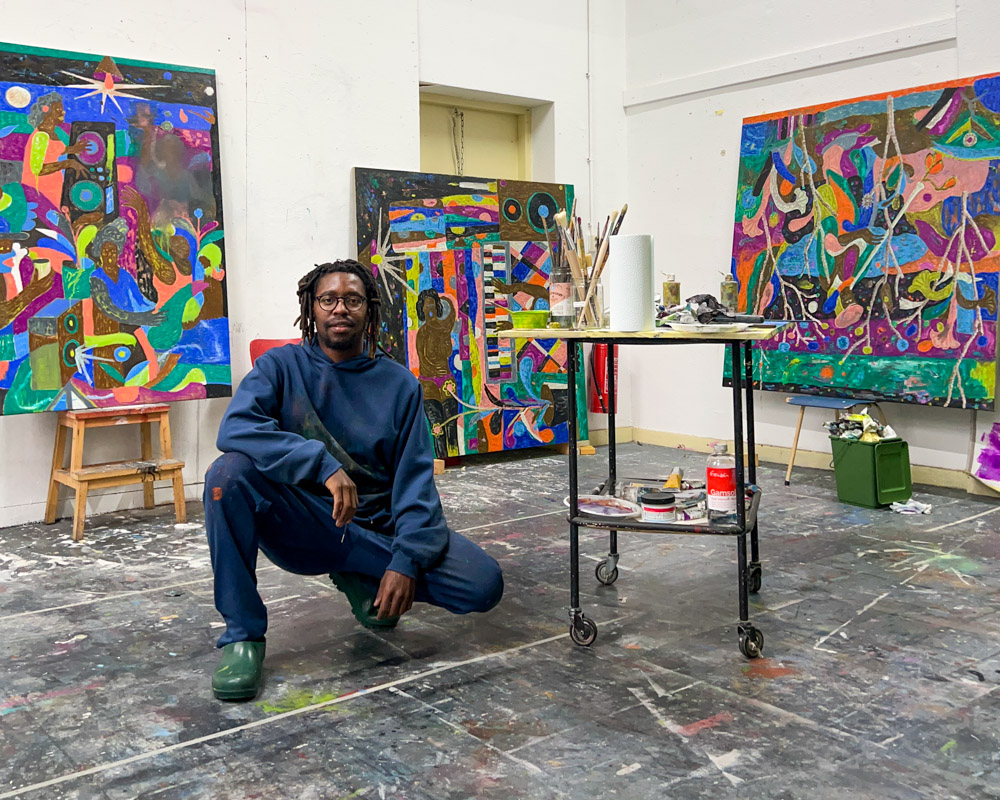
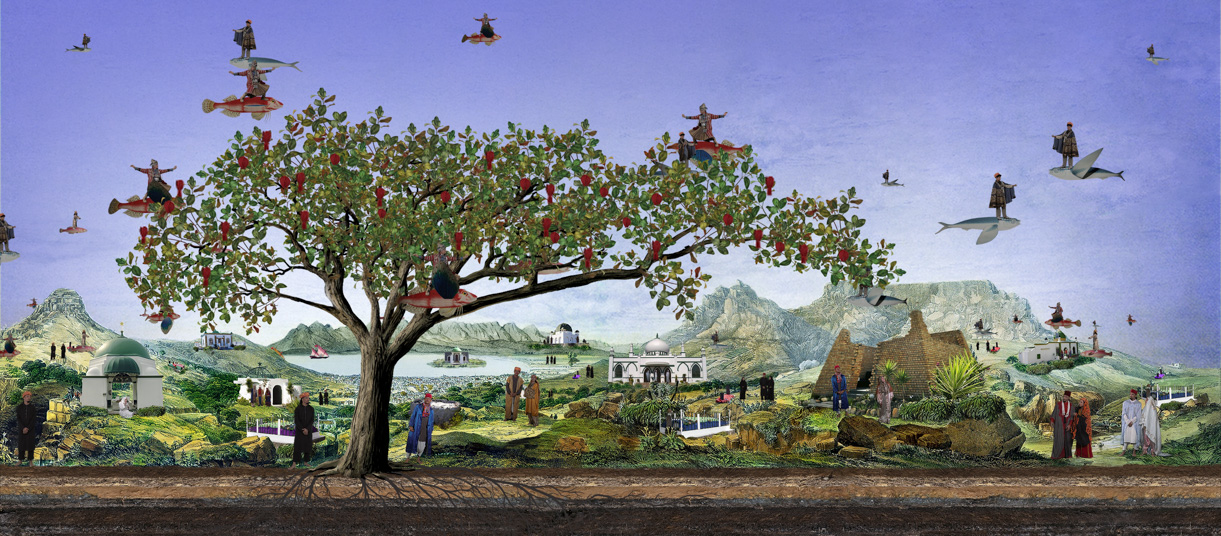
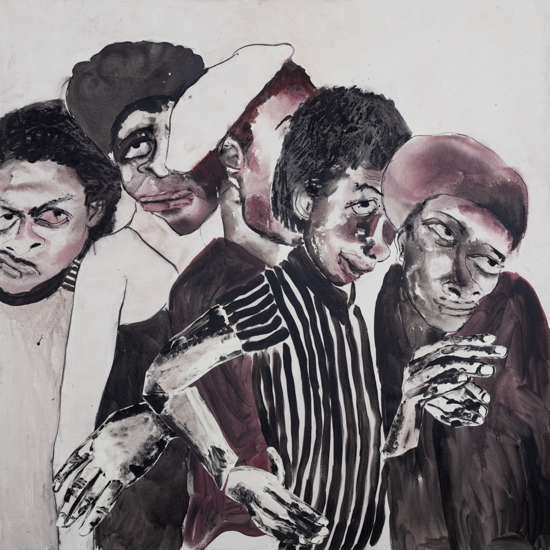
A growing number of African-born artists are contributing to the rich diversity of the Dutch artistic landscape today, often with great success. For example, Neo Matloga (South Africa) has won the Royal Award for Visual Arts and the ABN AMRO Art Prize (now Award) in recent years for his intriguing collages. He was also nominated for the Volkskrant Visual Arts Prize. African artists have exhibited in the Dutch pavilion at the Venice Biennale. Virtually all leading museums and galleries in the Netherlands have organised solo or group exhibitions featuring African artists.
Much of this work, until recently, still remained beyond the focus of established artistic institutions and critics. Today’s Prix de Rome’s rich selection is therefore more than a justified catching up. As we slowly awaken from a colonial nightmare, we recognize the contours of seductive, sometimes painful, often unexpected imaginations.
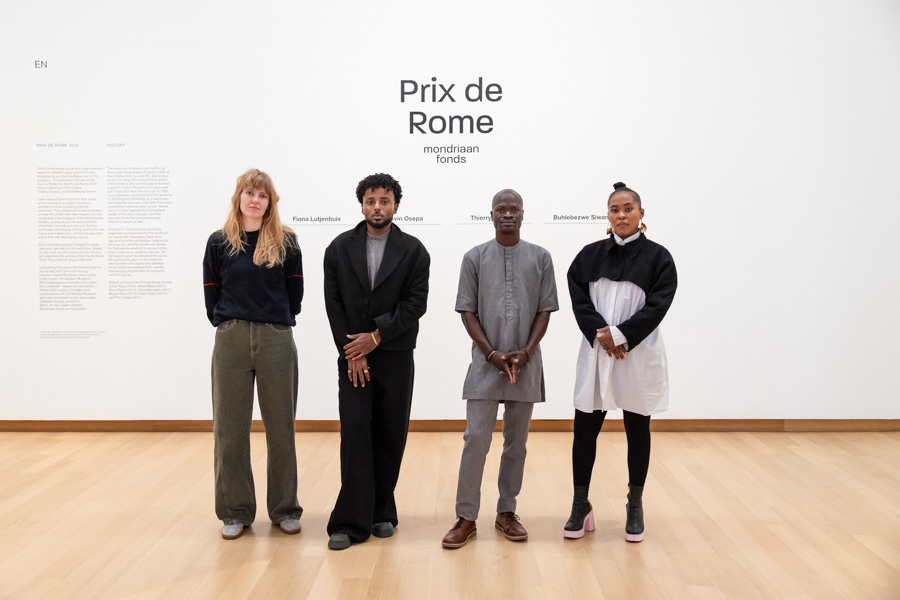
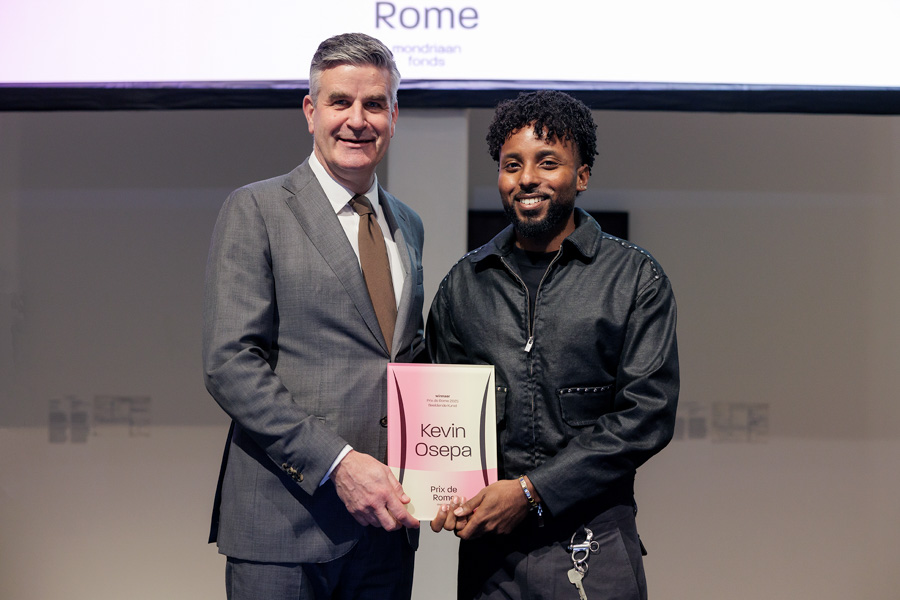
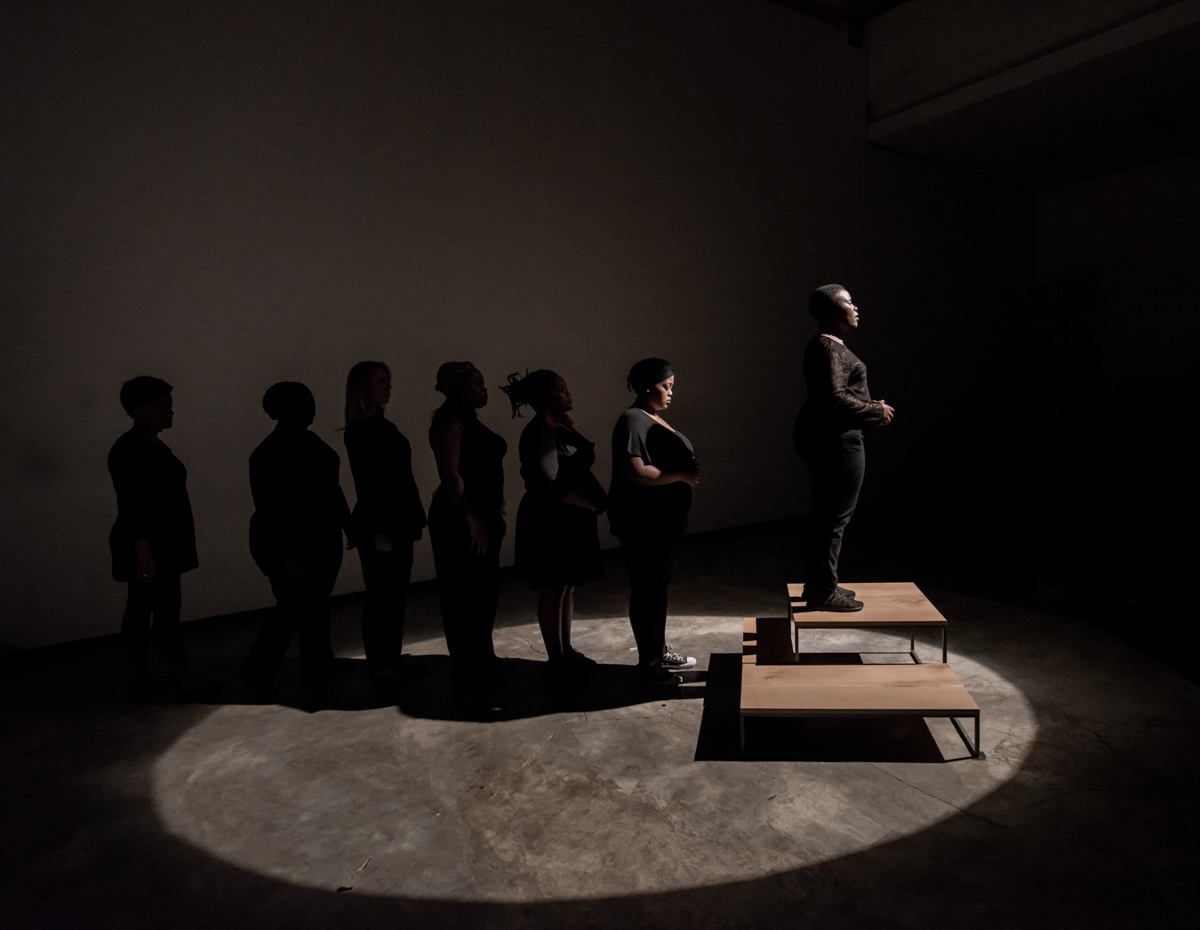
This year, Thierry Oussou (b. 1988, Benin) and Buhlebezwe Siwani (b. 1987, South Africa) were among the nominees for the Prix de Rome, which was ultimately awarded on 17 December to Kevin Osepa (b. 1994, Curaçao; see box) for his remarkable living archive of Afro-Caribbean rituals. The fourth contender, Fiona Lutjenhuis (b. 1991, the Netherlands), focused her cosmic contribution on the story of the snail (St.) Eve.
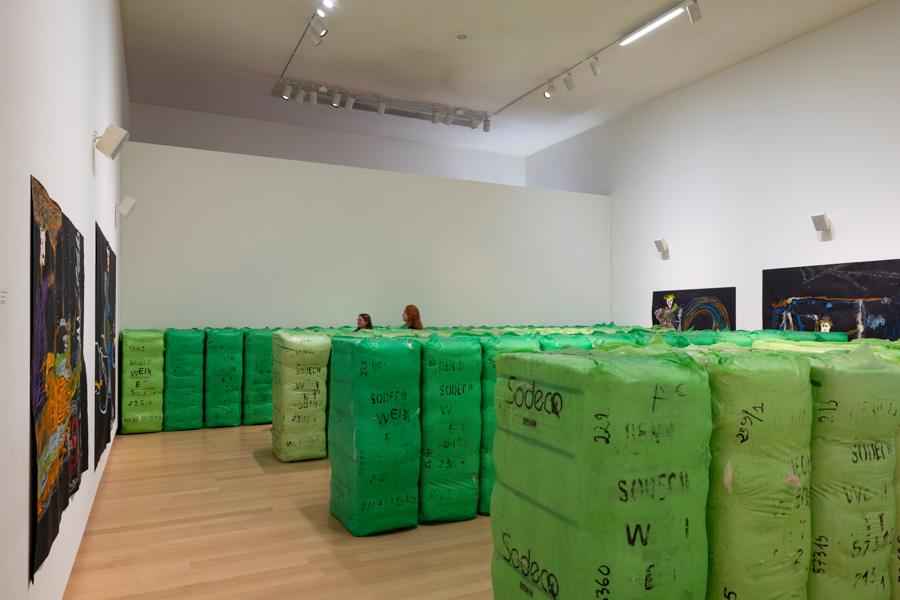
Thierry Oussou, The Grain that Salted the Sea, 2025. Courtesy of the artist. Photo: Peter Tijhuis
The slowly disappearing ritual of Ocho Dia
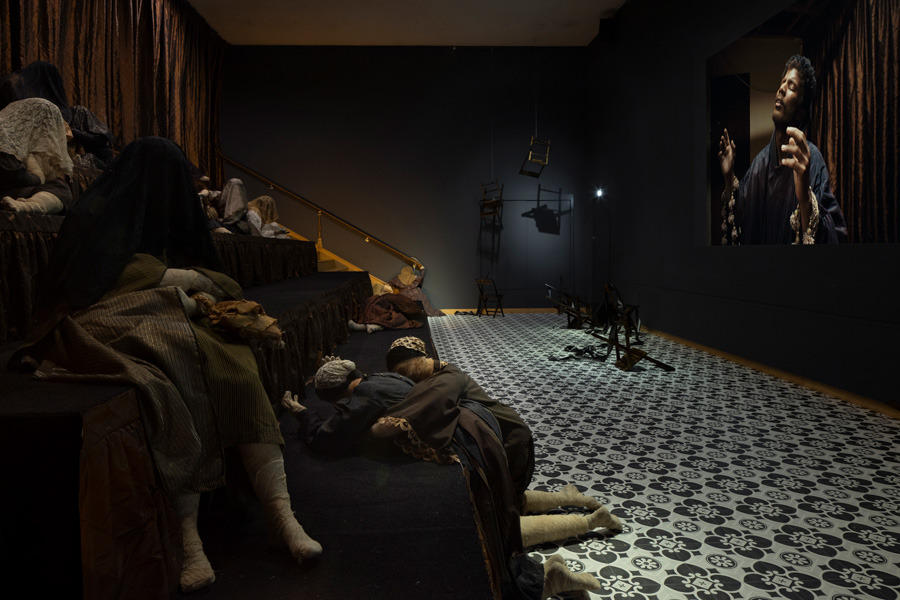
Kevin Osepa, Lusgarda, 2025. Mixed-media installation with video (color, sound, 19 min., 08 sec.) courtesy of the artist. Photo: Peter Tijhuis
Visual artist and filmmaker Kevin Osepa explores Afro-Caribbean spirituality, heritage, and colonial memory, approaching these themes through a deeply personal and queer lens, always situated within a broader social context.
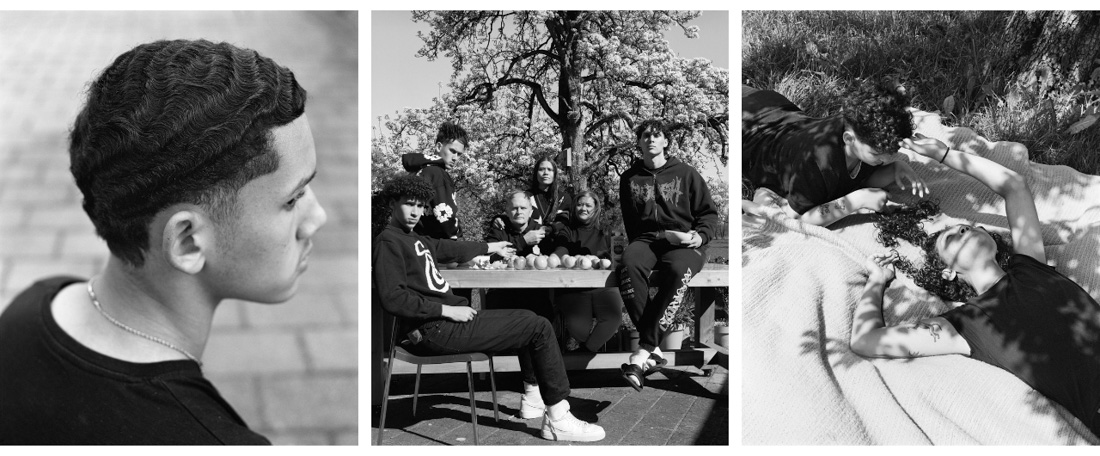
The slowly disappearing ritual of Ocho Dia, an eight-day mourning period following a funeral on his native island of Curaçao, is the starting point for the installation that Osepa created for the Prix de Rome. A museum corridor is transformed into a living room, complete with black-and-white tiled floors, a fan, washbasins mounted on a blue wall, and laundry hanging to dry. At the end of the corridor, we enter an auditorium where dolls lie scattered across the floor. Are they relatives, mourners, or the deceased? We watch a film that evokes Ocho Dia. The work is a powerful, highly evocative whole, an ode to life.
State Secretary Koen Becking (Education, Culture and Science) and winner Kevin Osepa. Photo: Aad Hoogendoorn.
The Grain that Salted the Sea, as Thierry Oussou titles his work, is a tribute to plantation workers in Benin’s cotton industry as well as employees of Amsterdam’s municipal transport company. Oussou links the view from his studio in Wittenburg, from where he could watch the transporters, with his memories of the arduous labour of cotton pickers in his native country. Both groups belong to the working class, which, in Oussou’s view, has been a driving force of society at both ends of the globe.
Cotton bales
Cotton production in Benin accounts for 13% of the gross national product, provides 40% of rural employment, and sustains the livelihoods of more than half of the population. Historically, cotton has also left a profound mark on Beninese society. In the United States, enslaved people were forced to cultivate and process cotton, with the profits largely benefiting European owners. According to Oussou, this power dynamic persists in new forms: although people are no longer deported to the US, its legacy endures and is a topic we must reflect on.
To symbolically visualise the triangular trade between Africa, the US, and Europe, the artist had several dozen bales of cotton shipped to the Netherlands, which now form the heart of the installation. On one of the side walls, Oussou displays documents that reveal the extensive bureaucracy governing this shipment.
In Benin, art is receiving more attention than it did under previous governments, and several museums have recently opened across the country. Oussou is enthusiastic about this, but he also wonders how he can explain to someone from the village where he grew up exactly what he creates and what moves him. “How can I make them understand?”
The cotton bales and accompanying documents seem like anchors, helping to illuminate both the work and the motives that drive Oussou. The impressive paintings depict the Amsterdam transport company. It is a pity, however, that the museum’s display, because of the arrangement of the cotton bales, partially obscures the paintings. A more generous spacing would have been preferable.
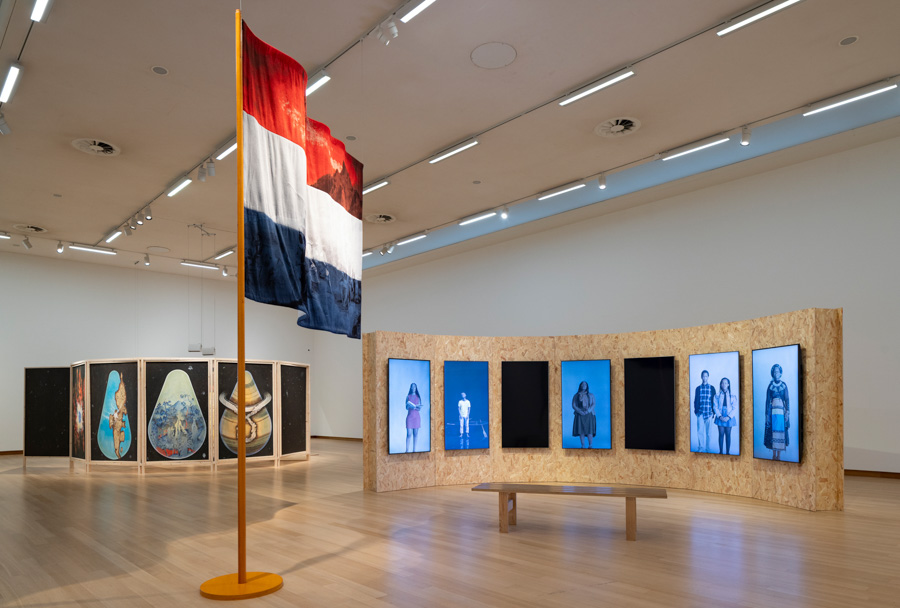
Front: Buhlebezwe Siwani, iNkanuko, 1652, 2025. Mixed-media installation with flag and videos (color, sound, 52 min., 03 sec.) courtesy of the artist. Back: Fiona Lutjenhuis, The Shell of Life, 2025. Mixed-media installation with painted panels, furnished dollhouse, and sound, courtesy of the artists and Galerie Fleur & Wouter. Photo: Peter Tijhuis
The Prince’s flag
South African artist Buhlebezwe Siwani (born 1987) created an installation that can be read as a provocative critique of the naïve ignorance many Dutch people display regarding her country’s history. The work features a large flag embroidered with figures that narrate the story of Jan van Riebeeck, who, on behalf of the Dutch East India Company (VOC), raised the Dutch Prince’s flag in South Africa in 1652, laying the foundations for what would become the Cape Colony. In the video component of the installation, Black and Brown South Africans reflect on how this episode is depicted in their history books as “the beginning” of South African history, although the region had been inhabited for some 25,000 years.
The flag of the old South Africa was based on the Dutch Prince’s flag (orange, white, and blue). Today’s new flag also uses these same colours, referencing, among other things, the apartheid era.
In Inkanuko (‘Lust’, 1652), Siwani narrates the story of the deep-rooted colonial ties between South Africa and the Netherlands. For many visitors, it will be a shocking revelation, though the artist herself prefers to describe it as a “plea for greater empathy.”
Farren van Wyk (b. 1993, Gqeberha, South Africa) is a South African–Dutch artist working in photography. Her first solo museum exhibition at Photomuseum The Hague (4 Apr...
South African artist Simphiwe Ndzube, the new Thami Mnyele Resident in Amsterdam, builds on magical realism, a tradition of writers and storytellers “who do not distinguish between reality and fa...
There are disputes about art. And then there are disputes that expose the nervous system of an entire democracy. The case before the High Court of South Africa, Goliath and Others v Minister of Spo...
Thania Petersen places her own body and gaze at the centre of histories long written about her community. Her photographic self-portraits in I Am Royal (2015), made as a gift to her children, gaine...
Neo Matloga’s new solo exhibition is about resilience – not the kind we shout about, but the quiet kind. The kind found in small rituals, in the decision to show up again. These are portraits o...